



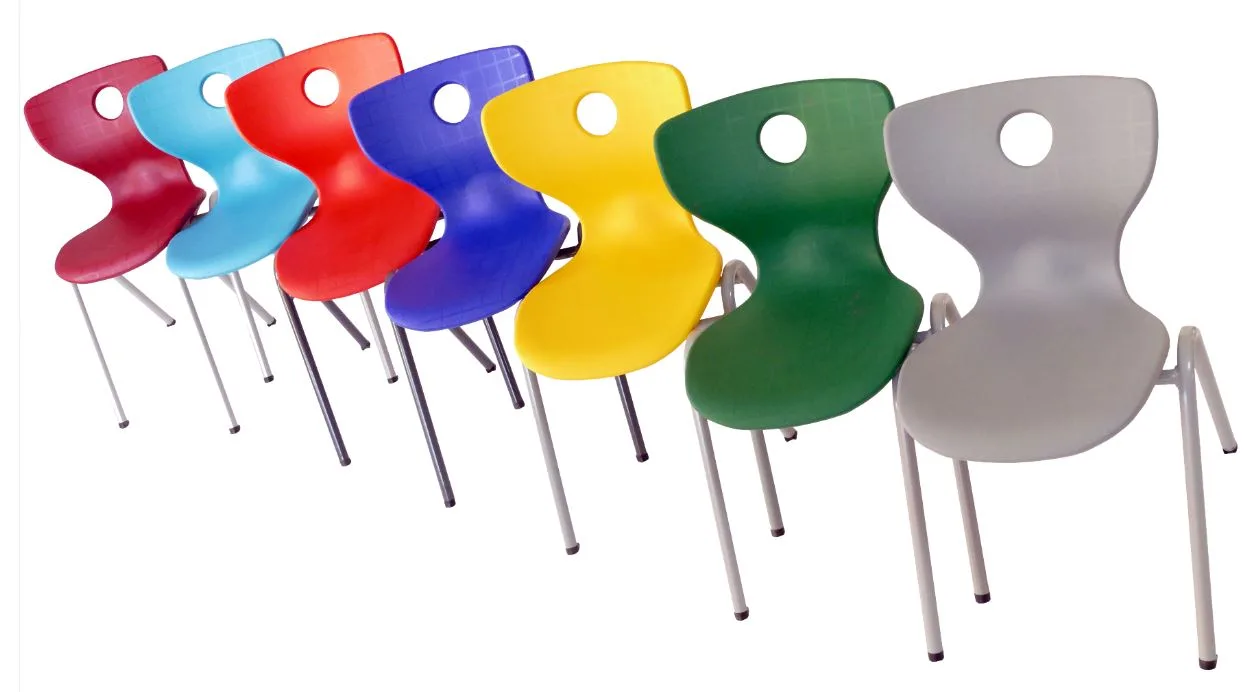
Dolse Student Chair
Product Code: SN 10
Dolse monobloc student chair: one-piece flexible plastic seat and backrest, seven colour options, powder-coated tube profile legs. Light and stackable.
- Product code
- SN 10
- Seat & backrest
- One-piece monobloc plastic
- Colour options
- Burgundy, light blue, red, navy, yellow, green, grey
Free project survey Custom, quote-based pricing TSE / ISO 9001 certified production
Key Features
- One-piece monobloc plastic seat and backrest — no screwed joint to work loose
- Seven colour options: burgundy, light blue, red, navy, yellow, green, grey
- Colour is in the material itself — no different colour appears underneath when scratched
- Flexible plastic body — springs back on impact rather than cracking
- Ergonomic form narrowing at the waist, carrying and ventilation hole in the backrest
- Electrostatic powder-coated tube profile legs with plastic glides
- Stackable construction — space can be cleared in multi-purpose classrooms
- Seamless, stitch-free surface — wipes clean with a damp cloth in one pass
Product Description
The Dolse monobloc student chair, with seat and backrest produced from a single piece of plastic, is the most widely used chair type in classrooms. With its ergonomic form narrowing at the waist, the carrying hole in the backrest and its electrostatic powder-coated tube profile legs, it is used at every level from primary to high school. Seven different colour options make it a preferred choice for schools that want to give their classrooms an identity.
Monobloc construction: where does the durability come from?
The term monobloc describes seat and backrest being produced in a single mould rather than assembled as separate parts. The concrete result of that is the disappearance of joints. On school chairs a fault almost always starts in the same place: the screws connecting the seat to the backrest loosen, the hole widens and the panel starts to move. On a one-piece body there is no connection to loosen, so that chain of failure never begins.
The second benefit is impact behaviour. When a plastic that can flex to a certain degree is used instead of a hard, brittle material, the energy of a chair tipping over or being knocked is met by springing back rather than cracking. In an environment where students drag, push and lean back on chairs, that difference in behaviour is the factor determining the product’s real life.
Seven colours and classroom identity
This model is produced in seven colours: burgundy, light blue, red, navy, yellow, green and grey. Colour variety is not only an aesthetic preference; schools also use it as a practical system. When a different colour is assigned to each level or each floor, it is clear from a distance where a moved chair belongs and classes do not get mixed up during end-of-year rearrangements. Vivid tones are preferred at kindergarten and primary level, while neutral colours such as grey and navy are more common in high schools and tutoring centres.
The colour of the plastic body is the material’s own colour, not a surface paint. That means no different colour appears underneath when it is scratched — the form of wear most complained about on painted surfaces does not occur here.
Form and seating comfort
The body has a profile that narrows at waist height and widens at the seat and backrest. That narrowing lets the lower part of the backrest sit into the small of the back and reduces the tendency to slide forward when seated for long periods. The oval hole at the top of the backrest serves two purposes: the chair is easily lifted with one hand and air circulates in the back region. The fine square texture on the seat surface provides grip at the contact surface and reduces slipping.
Stacking, carrying and cleaning
The tube profile legs splay slightly forwards; this form makes it possible to stack the chairs. In schools where the classroom serves several purposes this is a decisive feature — chairs can be stacked at the side and the space cleared. Because the plastic body is light, carrying is no problem even for younger age groups.
On the cleaning side the monobloc construction is again advantageous: with no seams, stitching or fabric surface, it wipes clean in a single pass with a damp cloth. Spilled drinks or paint stains do not soak into the material. The plastic glides at the leg ends protect the floor and reduce the noise made when a chair is pulled.
The condition of those glides is a simple but important maintenance item. A worn glide lets the metal leg contact the floor directly; that both scratches the floor and raises the noise level in the room. A quick look under the chairs at the start of each term solves, with a few glide replacements, a problem that would otherwise turn into floor renewal cost. In schools where the classes on the floor below are disturbed, this is usually the real cause.
Which levels and spaces is it suitable for?
Classrooms are this chair’s main area of use; it is also widely used in tutoring centres, study halls, multi-purpose halls and computer laboratories. It works independently of desk type: it can be positioned beside single or double desks, opposite the teacher’s desk or in independent working areas. Share your school’s desk model and we can determine the matching height and colour combination together.
Height selection and desk compatibility
Chair height cannot be assessed on its own; it forms a whole together with the desk’s top height. In a correct match the student’s feet rest flat on the floor, thighs sit parallel to the seat and elbows come level with the top. If the chair is too high the feet dangle and pressure forms behind the calf; if it is too low the knees rise and the student hunches towards the top.
For that reason we recommend not thinking about the chair order independently of the desk order. Measure and share the top height of your existing desks and we can work out the matching chair step — that measurement becomes critical particularly where desks are left over from previous years and only the chairs are being renewed. If there is more than one desk step in the same school, the chair distribution should be planned in parallel.
Ordering, quantity and delivery
On chair orders the quantity is calculated from student numbers, not from the number of desks; in schools using double desks two chairs are needed per desk. We recommend adding a small spare margin for new enrolments arriving during the year and for breakage and wear. If you want to plan the colour distribution by level or floor, we set that up together at the ordering stage. The delivery charge is calculated according to order volume and destination province and added to the quotation as a separate item; it is not included in the product price. The project survey is free of charge and we ship across Türkiye and to export markets.
Models and Variants
| Model | Code | Description |
|---|---|---|
| Dolse — Vivid Colours | SN 10 | Red, yellow, green, light blue. Preferred at kindergarten and primary level to give classrooms an identity. |
| Dolse — Neutral Colours | SN 10 | Grey, navy, burgundy. A plain palette used more widely in high schools, tutoring centres and institutional halls. |
| Dolse — Colour-Coded Distribution | SN 10 | A different colour assigned to each level or floor. Where a moved chair belongs is clear from a distance and end-of-year rearrangements speed up. |
Frequently Asked Questions
Why is a monobloc chair more durable?
Because the seat and backrest are produced in a single mould, there is no screwed joint to work loose. On school chairs a fault almost always starts at those joints: the screw loosens, the hole widens, the panel moves. On a one-piece body that chain never begins. The flexible plastic also springs back on impact rather than cracking.
How many colour options are there?
Seven colours are produced: burgundy, light blue, red, navy, yellow, green and grey. The colour is in the material itself, not a surface paint; so no different colour appears underneath when it is scratched.
Can we distribute the colours by level?
Yes, this is a common practice. When a different colour is assigned to each level or each floor, it is clear from a distance where a moved chair belongs and classes do not get mixed up during end-of-year rearrangements. We plan the distribution together at the ordering stage.
Can the chairs be stacked on top of one another?
Yes. Because the tube profile legs splay slightly forwards, the chairs stack. In schools where the classroom is used for several purposes, the chairs can be stacked at the side and the space cleared.
How is it cleaned?
Because there is no seam, stitching or fabric surface, it wipes clean in a single pass with a damp cloth. Spilled drinks or paint stains do not soak into the material. This is the clearest maintenance advantage over upholstered chairs.
How many should we order?
Quantity is calculated from student numbers, not from the number of desks; if you use double desks, two chairs are needed per desk. We recommend adding a small spare margin for new enrolments arriving during the year and for wear.
Which desk models is it compatible with?
It can be used with all single and double desk models. Share your school's desk model and height step and we will determine the matching chair height and colour combination together.
Other Groups in the Same Category
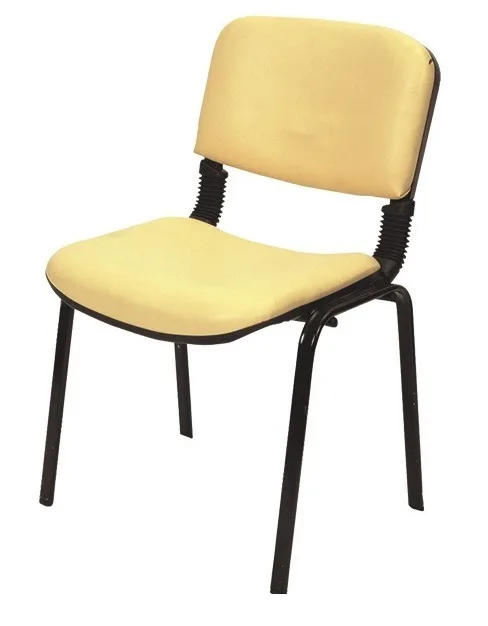
Form Student Chair
Form chair: fabric-over-foam upholstered seat and backrest, flexing backrest connection, stackable metal frame. For meeting and study halls.
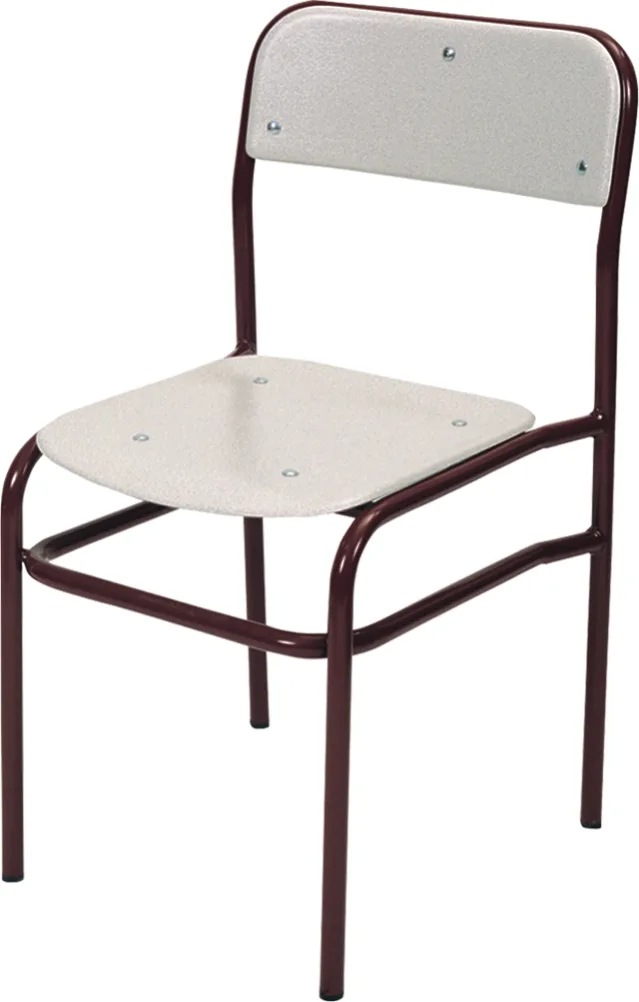
Werzalit Student Chair
Werzalit student chair: screw-mounted Werzalit seat and backrest panels, powder-coated tube profile frame. Suitable for classroom and dining hall use.