

Chairs
Dolse Student Chair
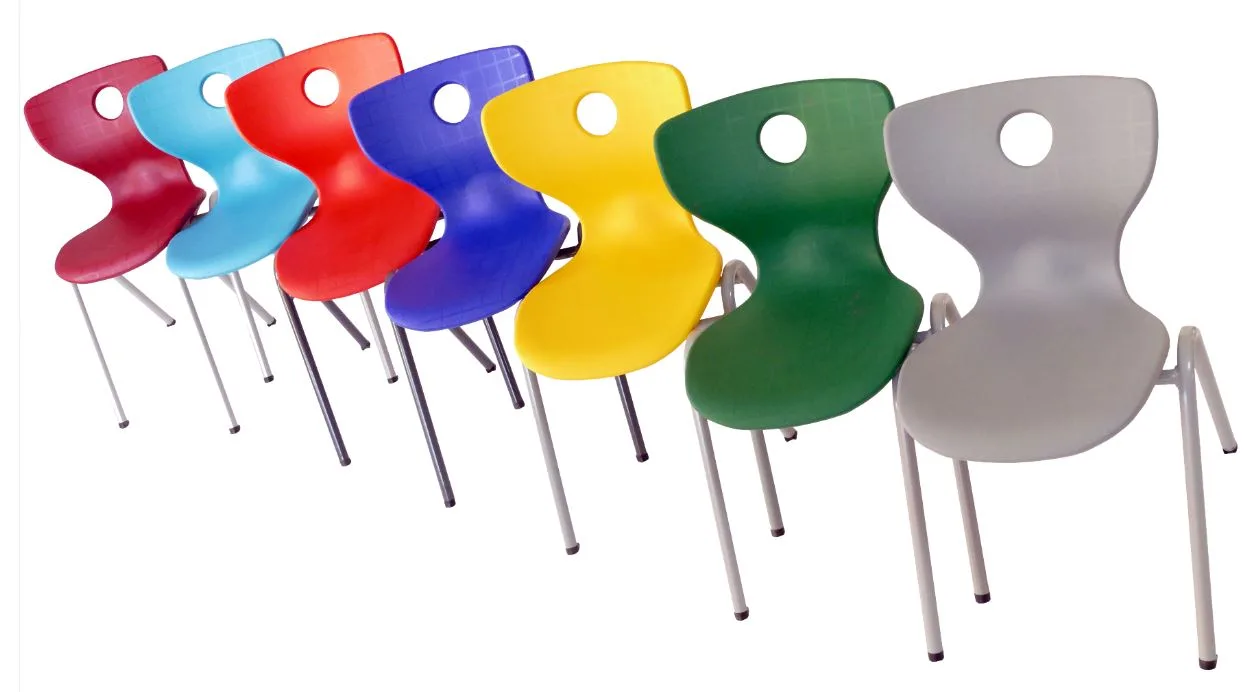
Dolse monobloc student chair: one-piece flexible plastic seat and backrest, seven colour options, powder-coated tube profile legs. Light and stackable.



5 product groups
Durable, functional work tables and special fittings for music and art workshops.
Dolse monobloc student chair: one-piece flexible plastic seat and backrest, seven colour options, powder-coated tube profile legs. Light and stackable.
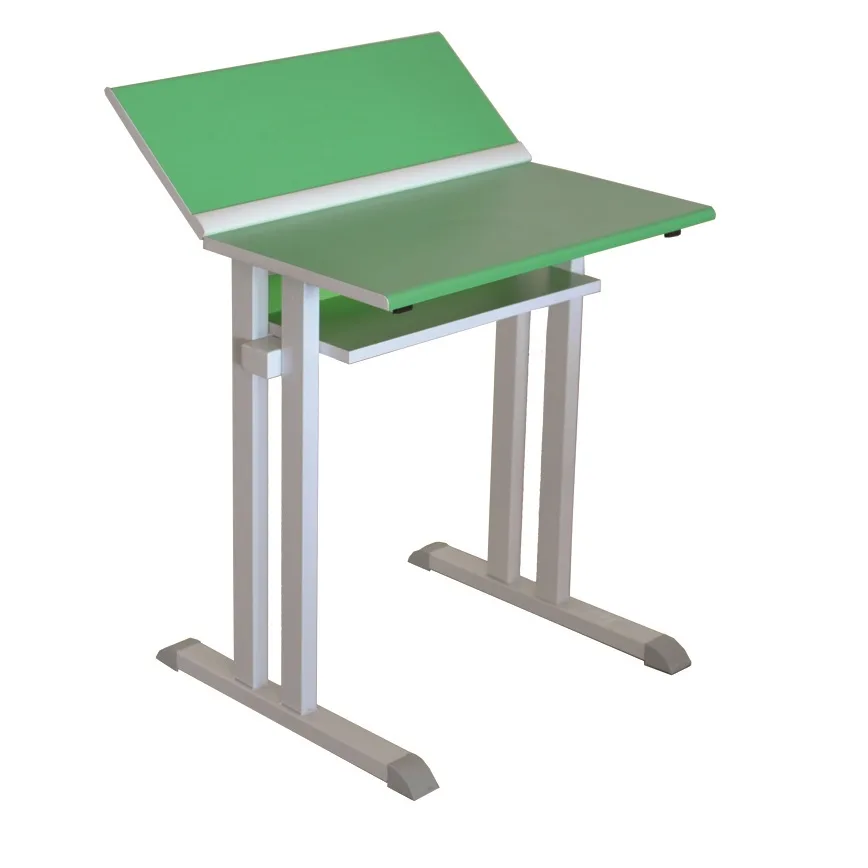
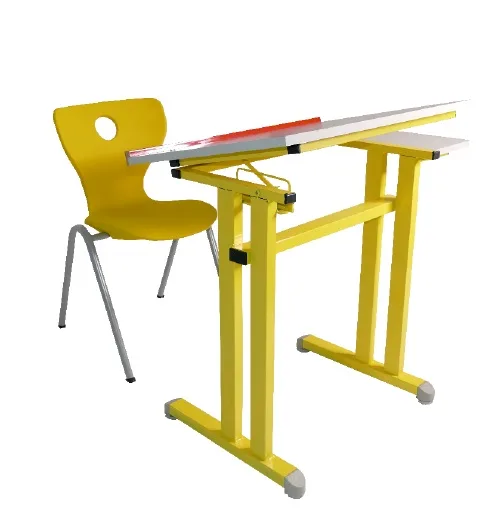
Student music table for music rooms: 50x70 cm melamine top with space for sheet music and instrument, powder-coated frame. Code MM 01.
Student art table for art rooms: 50x70 cm melamine top, powder-coated frame, optional paint- and water-resistant surface. Code RM 01.
Trapezoid-top single student desk: melamine, MDF-lam, CDF or compact laminate top, powder-coated frame, primary/middle/high school height steps.
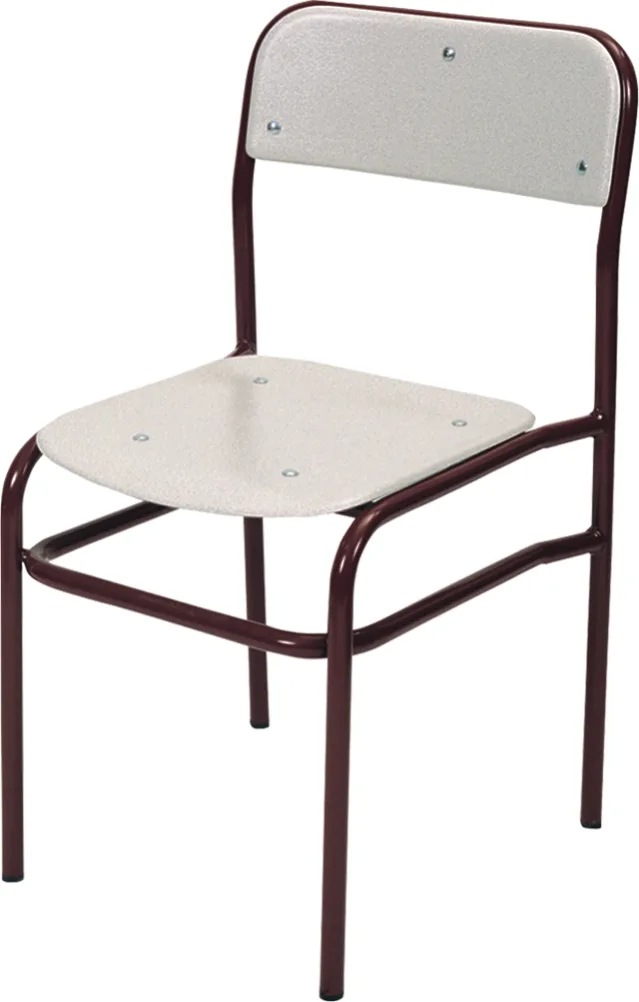
Werzalit student chair: screw-mounted Werzalit seat and backrest panels, powder-coated tube profile frame. Suitable for classroom and dining hall use.
Workshop equipment has to meet the toughest usage conditions, in vocational schools and practice rooms alike. Here furniture is not merely a surface to work on but a work station: it takes impacts, tools are set down on it, cutting and assembly happen on it.
In an ordinary classroom the hardest contact a top surface faces is a pen and a notebook. In a workshop the same surface meets tool impact, abrasion, oil and chemical contact. The material class used on workshop benches is therefore markedly above classroom furniture.
Compact laminate and high-density pressed boards come to the fore under those conditions; their closed structure is liquid-tight and their surface hardness withstands daily impact. On the frame side, box-section structures are preferred — a rectangular section resists bending better than a round profile of the same wall thickness.
In workshop layout, safety comes before capacity. Movement space must be left around every working position, emergency exit routes must never narrow and the teacher must be able to see all stations. In workshops with machinery, safety distances around the machines directly determine the layout.
Cleanability and durability come first in seating selection; fabric-upholstered units are not suitable for this environment. Monobloc or panel-seat chairs both wipe clean and withstand heavy use.
Workshop furniture is not a standard product. Bench heights vary with the work performed — an assembly bench used standing cannot share dimensions with an electronics table used seated. Socket positions, ventilation and tool storage needs also shape the design.
Workshop projects therefore start with a survey: room dimensions, the type of work to be done, the number of pupils working simultaneously and any machine layout. Share those and we will prepare a project proposal and price quotation; we charge nothing for the survey. If the practice room also has a theory section, see classroom furniture.
In a workshop, where a tool sits determines both safety and the flow of the lesson. When every tool has a defined place, end-of-lesson collection is quicker and a missing tool is noticed immediately; in a disorganised workshop the same task costs time again after every session.
Storage layout is therefore developed together with the bench arrangement: frequently used tools close to the working position, hazardous ones locked and out of direct pupil reach. The balance between under-bench storage and wall-mounted panels varies with workshop type and pupil age. Share which tools will be used and how your lessons run, and we will produce the storage layout as part of the project.
One final note: as pupil numbers rise, the area per working position becomes critical quickly. Setting a realistic figure for how many pupils will work simultaneously is far easier than dealing with a cramped workshop afterwards — and we recommend calculating that figure from safe working area rather than from class size.
In a classroom the hardest contact a top faces is a pen and a notebook; in a workshop the same surface meets tool impact, abrasion, oil and chemical contact. The material class used on workshop benches is therefore markedly higher.
It varies with the work performed. An assembly bench used standing cannot share dimensions with an electronics table used seated. Share what work will be done in your workshop and we will determine the appropriate heights together.
Safety comes before capacity. Movement space must be left around every working position, emergency exits must not narrow and the teacher must be able to see all stations. In workshops with machinery, safety distances around the machines directly determine the layout.
Cleanability and durability come first; fabric-upholstered units are not suitable for this environment. Monobloc or panel-seat chairs both wipe clean and withstand heavy use.
Room dimensions, the type of work to be done, the number of pupils working simultaneously and any machine layout are the first four pieces of information. Share those and we will prepare a project proposal and price quotation; the survey is free of charge.