

Laboratory
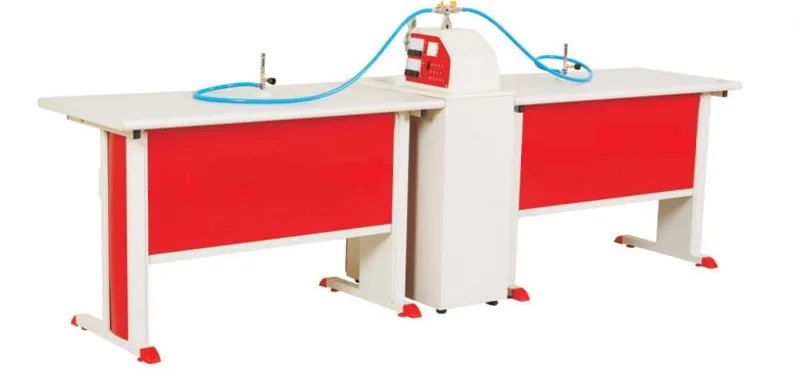
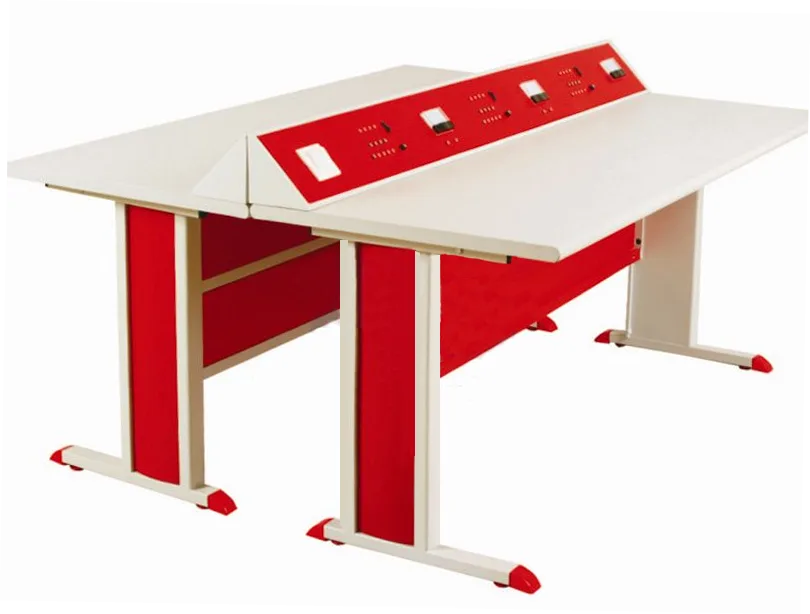
Physics Laboratory Table and Unit
Student table and under-unit for school physics laboratories: fibre or CDF top, flat and vibration-free work surface, powder-coated rigid frame.

2 product groups
Durable lab benches and laboratory equipment for science, physics, chemistry and biology labs.
Student table and under-unit for school physics laboratories: fibre or CDF top, flat and vibration-free work surface, powder-coated rigid frame.
Student table and under-unit for school chemistry laboratories: fibre or CDF chemical-resistant top, powder-coated frame, project-based production.
A school laboratory table cannot be chosen by the same logic as any classroom furniture. In a laboratory the surface meets acids, bases, solvents, heat and moisture at the same time; and in physics experiments the flatness of the surface directly affects measurement accuracy. Laboratory equipment therefore requires building a project rather than selecting a standard product.
| Product | Top | Primary priority | Under-unit |
|---|---|---|---|
| Chemistry Laboratory Table and Unit | Fibre or CDF | Chemical resistance — acids, bases, solvents | For experiment sets and glassware |
| Physics Laboratory Table and Unit | Fibre or CDF | Surface flatness and absence of vibration | Compartmented for multi-part sets |
An ordinary classroom top is melamine faced. Melamine withstands a drop of dilute acid for a few minutes; on contact with sulphuric acid, hydrochloric acid or sodium hydroxide the surface dulls, blisters and exposes the chipboard beneath, which is then damaged directly at the next contact — a chain of deterioration completed within a few terms.
Fibre and CDF cut that chain at the start. Both are homogeneous through their body rather than surface-faced; even if the surface is scratched or worn, no different layer appears beneath. The resistance belongs to the structure, not the surface.
| Material | Structure | Chemical resistance | Heat | At which level |
|---|---|---|---|---|
| Fibre | Homogeneous, high density | Top class | High | High school and above, intensive work with real reagents |
| CDF (compact) | Black core, high-pressure pressed | High | High | Middle school and basic experiment level |
Tell us which experiments your curriculum covers and we will say plainly which material will be sufficient. This is the single decision that saves the most in a laboratory project.
Layout in a laboratory has one priority: evacuation. Sightlines and working area follow.
| Criterion | Why | Practical measure |
|---|---|---|
| Evacuation route | Uninterrupted exit in an emergency | An unconstricted route to the door from any point |
| Eyewash access | First response to chemical contact | No table may block access |
| Aisle between tables | Students working back to back not colliding | At least 100–120 cm |
| Teacher position | Supervision and speed of response | The whole laboratory must be visible |
In a laboratory, disorder is a safety issue in its own right. The unit beneath the table keeps experiment sets and glassware within reach of students but closed and orderly. Unit configuration (shelf, drawer, closed compartment, lock) is determined per project according to how the laboratory is used.
An important warning: reagents must not be kept at the student table. The under-unit is for experiment materials, not a chemical store; chemicals should be kept in a separate, locked cabinet. We establish that distinction together when planning the laboratory.
Whether water, gas and electrical services are integrated into the table, and the position and number of sinks, are also determined per project. Share your existing service plan and we will establish how the table will be positioned.
A significant share of laboratory projects is not a new installation but the renovation of an existing laboratory. In that case the services usually stay where they are and new tables are positioned to the existing water, gas and electrical points.
We look particularly at two things in renovation projects. First, the real position of the existing service points — the location on the drawing and the location on site usually differ by a few centimetres, and that difference can change the table layout. Second, the floor marks and fixing holes left by the old tables; the new layout is planned taking them into account.
A frequent situation in renovation is that the laboratory has changed purpose over the years: a space built as a chemistry laboratory may now be used as a general science laboratory. In that case the top material should be re-assessed according to current use, not the old drawing.
A table alone does not make a laboratory. A chemical cabinet, a teacher demonstration bench, an eyewash station and ventilation are equally decisive. On the seating side, moisture- and chemical-resistant student chairs should be chosen; upholstered models are unsuitable for a laboratory.
Our school laboratory setup page covers layout, safety and equipment selection step by step.
It should not be. Melamine-faced tops withstand a drop of dilute acid for a few minutes; on contact with strong acids or bases the surface dulls, blisters and exposes the chipboard beneath, which is then damaged directly at the next contact. Fibre and CDF tops are homogeneous through their body — the resistance belongs to the structure, not the surface.
Fibre is the top class for chemical resistance and suits high school and above laboratories with intensive work using real reagents. CDF (compact) is a black-core, high-pressure-pressed structure offering a balanced durability-to-budget point at middle school and basic experiment level. Tell us which experiments your curriculum covers and we will say plainly which is sufficient — this is the single decision that saves the most in a laboratory project.
The top materials may be the same but the priorities differ. Chemistry is governed by chemical resistance. In physics, surface flatness and the absence of vibration come to the fore: in inclined plane, pendulum and optical bench experiments the table surface is a reference plane, and if the table wobbles the student reads an incorrect measurement.
No. The under-unit is for experiment sets, glassware and personal protective equipment. Reagents should be kept not at the student table but in a separate, locked cabinet. We establish that distinction together when planning the laboratory, and determine unit configuration (shelf, drawer, closed compartment, lock) according to your usage.
Service integration and the position and number of sinks are determined per project. Share your existing service infrastructure and plan and we will establish together how the table will be positioned and which connections can be brought to it. This is the real reason a laboratory requires building a project rather than buying a standard product.
Our priority is evacuation: an uninterrupted, unconstricted route to the door must remain from any point. Access to the eyewash station and fire extinguisher is never blocked by a table. Aisles are left at least 100–120 cm so that two students working back to back do not collide. The teacher's table is positioned where the whole laboratory is visible.
Moisture- and chemical-resistant, wipeable models should be preferred. Our moulded plastic and Werzalit panel student chairs are suitable for this space. Upholstered chairs are not recommended for laboratories; they wear quickly against chemicals and moisture and are difficult to clean.
Laboratory equipment is produced on a project basis; quantity, top material, unit configuration and service integration are determined for your laboratory. Project surveys are free. Share your laboratory dimensions, student numbers and existing service plan and we will prepare a layout proposal together with a quotation. Shipping is added to the quotation separately.