


Chairs
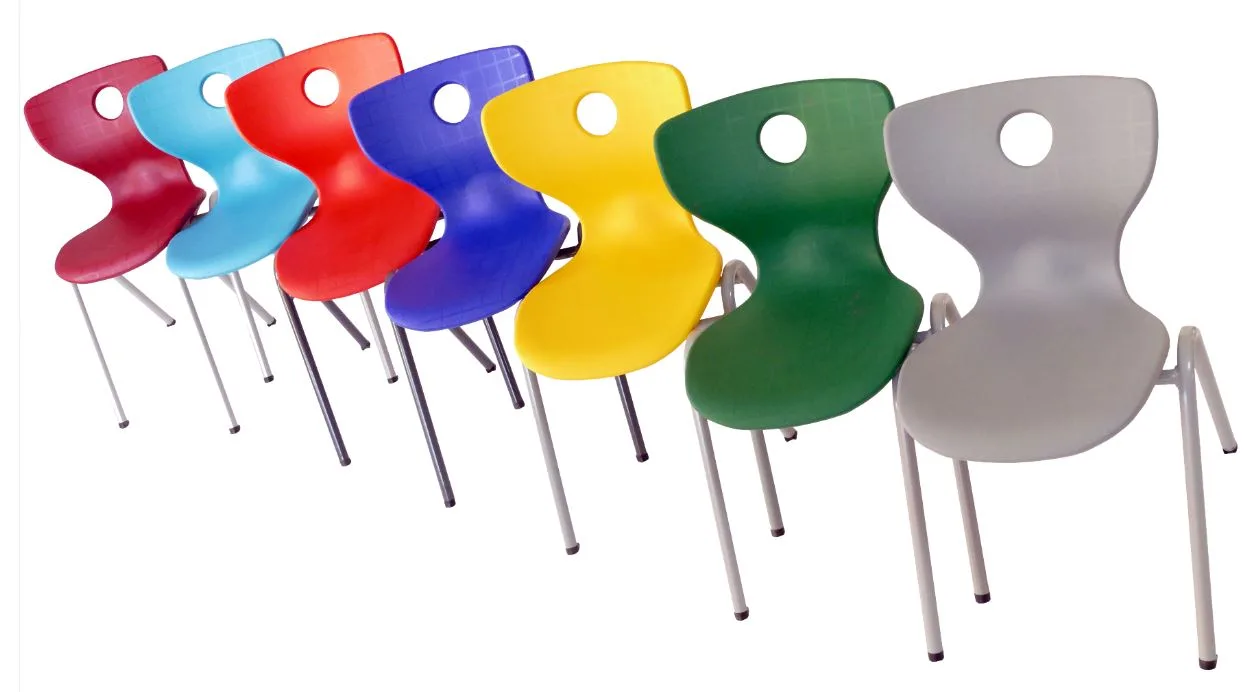
Dolse Student Chair
Dolse monobloc student chair: one-piece flexible plastic seat and backrest, seven colour options, powder-coated tube profile legs. Light and stackable.



1 product groups
Rounded-corner, colourful and safe activity tables, chairs and cabinets for pre-school.
Dolse monobloc student chair: one-piece flexible plastic seat and backrest, seven colour options, powder-coated tube profile legs. Light and stackable.
Kindergarten furniture is the most demanding area of school furnishing. In the pre-school age group dimensions shrink, safety expectations rise, and the effect of the space on learning is more pronounced than at any other level.
Kindergarten furniture is not simply a scaled-down version of primary school furniture. Children of this age do not sit in one place all day; they move continuously between play, activity and rest. Furniture that can be moved easily and pushed aside when needed therefore matters as much as seating comfort.
The criterion for height is that the child's feet rest flat on the floor and elbows sit level with the table. In institutions where ages vary within one room, mixing two height steps gives a better result than insisting on one.
The most frequent accidents at pre-school level involve sharp corners and tipping furniture. Rounded edge profiles, corner-free contact surfaces and wide-based leg arrangements are therefore a requirement rather than a preference in this age group.
For seating, monobloc plastic chairs stand out: there is no screwed joint to work loose, the flexible plastic springs back rather than cracking on impact, and the surface wipes clean in a single pass. Because the colour is in the material itself, a scratch does not reveal a different tone underneath — a common form of wear in young age groups is thereby removed.
In pre-school spaces colour is functional rather than decorative: it separates areas, defines groups and helps a child orient themselves. Activity zones can be distinguished visually through differently coloured seating.
An over-saturated palette, however, can create visual fatigue in a crowded room. In practice the most balanced result comes from keeping floors and large surfaces neutral and using colour as an accent on the seating.
A kindergarten room takes on several functions during the day: morning activity, table work, play and rest all happen in the same space. Furniture that is easy to move and can be gathered to one side is therefore more valuable than a fixed arrangement.
Light-bodied and stackable chairs provide that flexibility, and tables should be sized so they can be joined and separated. When tables joined for group work can be separated and moved aside afterwards, the room becomes a play area within minutes. That flexibility is the most practical way to maintain order in large groups. For transition classes, also consider single student desks.
The quantity of furniture matters as much as its size in pre-school spaces. Too much furniture narrows the child's movement area and eliminates the open floor needed for play. In this age group, fewer but well-chosen pieces produce a better result than a crowded set. Share your group numbers and room dimensions and we will find the balance together.
No. Children of this age do not sit in one place all day; they move continuously between play, activity and rest. Furniture that can be moved easily and pushed aside when needed therefore matters as much as seating comfort.
The most frequent accidents involve sharp corners and tipping furniture. Rounded edge profiles, corner-free contact surfaces and wide-based leg arrangements are a requirement rather than a preference in this age group.
Monobloc plastic chairs stand out: there is no screwed joint to work loose, the flexible plastic springs back rather than cracking on impact, and the surface wipes clean in a single pass. Because the colour is in the material, a scratch does not reveal a different tone.
Colour is functional in pre-school: it separates areas and helps children orient themselves. An over-saturated palette can create visual fatigue, so the most balanced result comes from keeping large surfaces neutral and using colour as an accent on the seating.
The criterion is that the child's feet rest flat on the floor and elbows sit level with the table. In institutions where ages vary within one room, mixing two height steps gives a better result than insisting on one.