



Multi Teacher Lectern
Product Code: KR 10
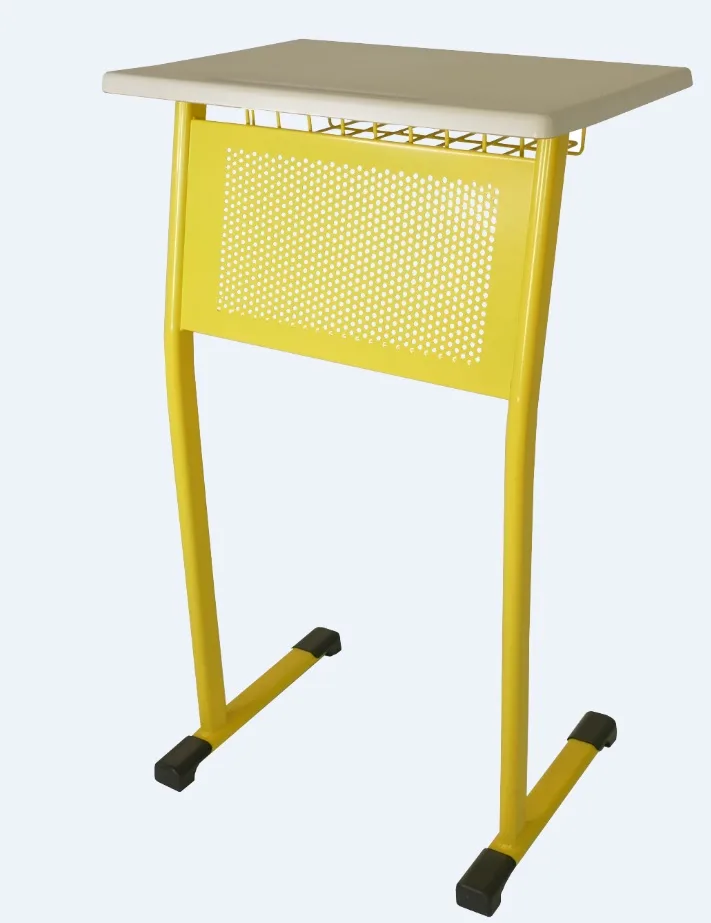
Multi teacher lectern: 45×63 cm Werzalit top, perforated sheet modesty panel, wire book rack and curved C-leg frame. For classrooms. Code KR 10.
- Product code
- KR 10
- Use
- Teaching while standing
- Top size
- 45 × 63 cm
Free project survey Custom, quote-based pricing TSE / ISO 9001 certified production
Key Features
- 45×63 cm Werzalit top — an open book and a notebook fit side by side
- Pen groove on the top — the pen does not roll off onto the floor
- Perforated sheet modesty panel — lightens the lectern visually, adds lateral rigidity to the frame
- Curved C-leg frame — no vertical leg at the front, comfortable stance in standing use
- Skid base — a broad bearing line against tipping forwards
- Wire book rack beneath the top — contents stay visible, forgotten material is noticed
- Visual harmony with student desks and the teacher desk in the same design family
- Frame and panel colour chosen from the RAL chart
Product Description
The Multi teacher lectern is a standing-use lectern produced for classrooms, with a 45×63 cm Werzalit top, a perforated sheet modesty panel and a wire book rack beneath the top. Its curved C-leg frame harmonises with the student desks in the same design family. For schools looking for a lectern with a Werzalit top, this is the plainest and most widely chosen option.
What is a lectern for in a classroom?
The teacher desk is for working seated; the lectern is for teaching standing. The two are not alternatives but complements. Most of teaching happens on the feet; the teacher stands in front of the board, sees the class, moves around. During that, a surface is needed where the lesson notes, the book and the remote can be placed — returning to the desk each time breaks the flow of the lesson.
The lectern fills that gap. Positioned beside the board, it means the teacher does not disconnect from the class to check a note, and eye contact continues. Thanks to its compact body it takes up far less room than a desk and so does not narrow the front section of the classroom. Its position is not fixed either: it can be moved according to the flow of the lesson.
Werzalit top and pen groove
The top is 45×63 cm Werzalit. That dimension is wide enough for an open textbook and a notebook to sit side by side — which is exactly what is expected of a lectern: not a working desk but a reading and support surface. The closed structure of the Werzalit surface prevents marker and chalk dust soaking in; it wipes clean with a damp cloth.
There is a pen groove on the upper surface of the top. Even on a level surface a pen rolls easily when a notebook is turned or the lectern is touched; the groove prevents that. It may look like a small detail, but bending down for a pen that has fallen on the floor mid-lesson is a moment that interrupts the teaching and distracts the class.
Perforated sheet modesty panel
The panel closing the front of the lectern is perforated sheet finished in the same powder coating as the frame. The perforated construction lightens the lectern to the eye. The lectern stands at the very front of the room, right beside the board — that is, permanently in the field of view. A solid panel in that position gives the impression of taking up more space than it should, whereas a perforated surface does not crowd the room.
The panel also hides the underside of the lectern from the class and adds lateral rigidity to the frame. Panel and frame colours are chosen from the RAL chart, so the lectern can be brought into the room’s colour scheme.
The lectern’s position should be decisive in the colour decision. A piece of furniture standing right beside the board is in the most looked-at area of the classroom; a vivid tone draws attention, a neutral tone recedes. At primary level a coloured lectern adds liveliness, while in examination- and presentation-focused spaces neutral tones are preferred because attention should stay on the board. It looks like a small decision, but it is one of the details that affects the room’s daily atmosphere.
Curved C-leg frame and standing use
The frame consists of tube profiles curving down to the floor and resting on a skid base. On a piece of furniture used standing, that form has a concrete benefit: because there is no vertical leg at the front of the lectern, the teacher can move closer, position their feet comfortably and shift their weight when standing for long periods.
The skid base makes the lectern harder to tip forwards. Leaning on the lectern, resting weight on it and pulling it by an edge are all part of daily use; a broad bearing line meets those movements safely. The plastic glides at the leg ends protect the floor and reduce noise when the lectern is slid.
Lectern height is the fundamental determinant of comfort on a piece of furniture used standing. At the right height a person reaches the surface without raising their shoulders, with elbows at a slight angle; too low a lectern leads to leaning forward, too high a one to shoulders being pulled up. Repeated throughout a lesson, that posture is felt as back and neck fatigue by the end of the day. If the height range of the teachers who will use the lectern differs markedly, we recommend sharing that before ordering.
Wire book rack
The wire book rack beneath the top is for the material needed through the lesson: a spare marker, an eraser, the textbook, the register. The open texture of the wire keeps the contents visible; material forgotten in a closed box goes unnoticed, whereas here it can be checked at a glance. Whether anything has been left at the lectern at the end of a lesson is clear immediately.
In schools where subject teachers move between rooms, this small store at the lectern proves more useful than expected. A teacher entering a different room each lesson has to carry their material with them; a few shared items that can be left at the lectern — a spare marker, a board eraser, a remote — reduce that burden. Keeping a room’s own material in the room also prevents it going missing.
Ordering and delivery
Top colour, frame and panel colour and quantity are determined on the order. The lectern is usually ordered together with the teacher desk; when both are chosen from the same colour scheme, the front section of the room looks unified. Our survey service is free of charge. The transport item appears on its own line in the quotation and its amount is set by shipment volume and delivery point; it is not merged with the product price. Because lecterns require no installation, they can be put to use immediately after delivery.
A point often missed in quantity planning is whether a lectern will go into every classroom. Some schools buy lecterns only for certain rooms and requests then arrive from the others over time; in that case small later orders both raise the unit cost and, because the production batch has closed, can show a difference in colour tone. If use is going to spread, planning the total requirement from the start works out more economical.
Models and Variants
| Model | Code | Description |
|---|---|---|
| Multi Lectern — Desk-Matched Colour | KR 10 | Frame and panel colours in the same RAL tone as the student desks in the room; the classroom is built from one design language. |
| Multi Lectern — Set with the Desk | KR 10 | Ordered together with the teacher desk in the same colour scheme; the front section of the room looks unified. |
| Multi Lectern — Accent Colour Panel | KR 10 | Neutral frame with a vivid modesty panel. The build that makes the lectern the focal point of the room. |
Frequently Asked Questions
Why is a lectern needed when there is a teacher desk?
The two are complements, not alternatives. The desk is for working seated, the lectern for teaching standing. Most of teaching happens on the feet; positioned beside the board, the lectern means the teacher does not disconnect from the class to check a note and eye contact continues.
How much room does the lectern take up in a classroom?
Thanks to its compact body it takes up far less room than a teacher desk and does not narrow the front section of the classroom. Its position is not fixed; it can be moved according to the flow of the lesson.
Is the top size sufficient for a textbook?
45×63 cm is wide enough for an open textbook and a notebook to sit side by side. What is expected of a lectern is a reading and support surface, not a working desk. If you need a wider surface, consider the Modena lectern with its CDF top option.
Is a pen groove really necessary?
Even on a level surface a pen rolls easily when a notebook is turned or the lectern is touched. Bending down for a pen that has fallen mid-lesson is a moment that interrupts the teaching and distracts the class; the groove prevents that from the start.
Why is the modesty panel perforated sheet?
The lectern stands at the very front of the room, right beside the board and permanently in view. A solid panel in that position gives the impression of taking up more space than it should, whereas a perforated surface does not crowd the room. The panel also hides the underside and adds lateral rigidity to the frame.
Can the lectern tip over?
The skid base forms a broad bearing line that makes tipping forwards difficult. Leaning on the lectern, resting weight on it and pulling it by an edge are part of daily use; the base is designed to meet those movements.
Is installation required?
No, lecterns require no installation and can be put to use immediately after delivery. That noticeably simplifies the delivery process compared with desk and auditorium systems.
Other Groups in the Same Category
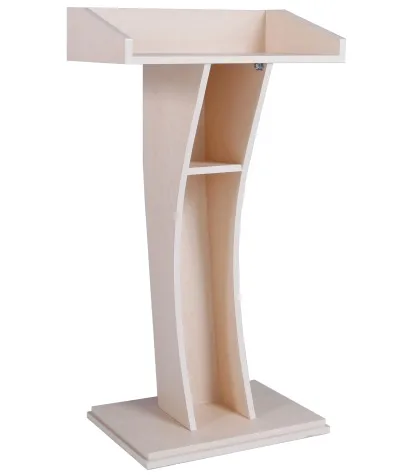
Wooden Speaker's Lectern
Wooden speaker's lectern: 18 mm MDF-lam body, forward-sloping reading surface and an internal lower shelf. For conference, ceremony and protocol areas. Code…
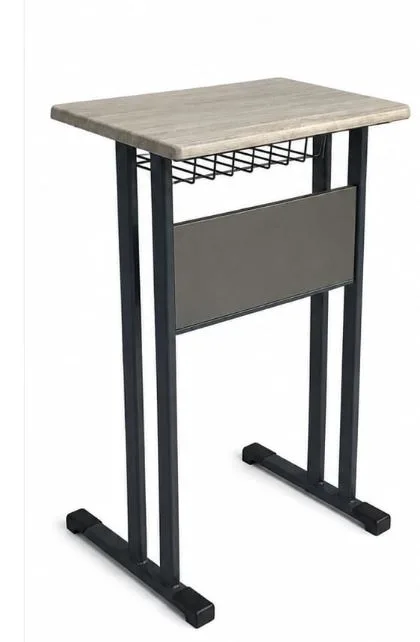
Dünya Teacher Lectern
Dünya teacher lectern: 45×63 Werzalit top, wire book rack beneath the top, flat panel front, upright twin tube profile frame and T-skid…
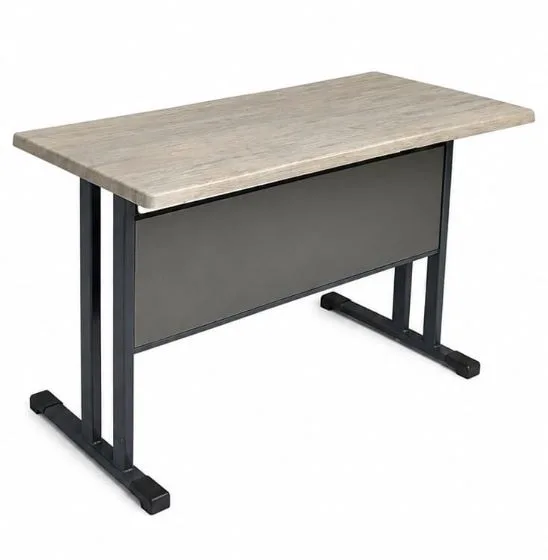
Dünya Teacher Desk
Dünya teacher desk: 60×110 melamine top, flat panel modesty screen, with drawer and an upright twin tube profile skeleton. For classrooms and…