

Classroom Equipment
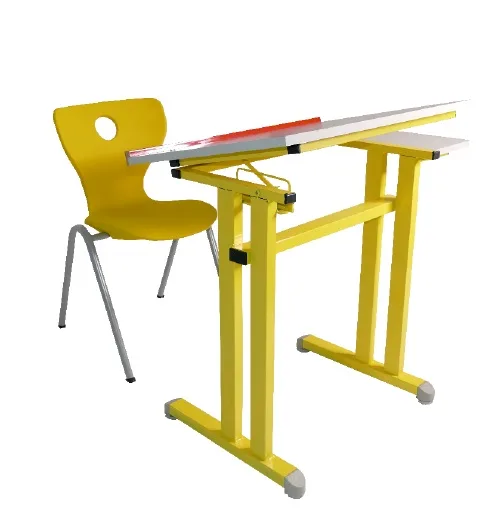
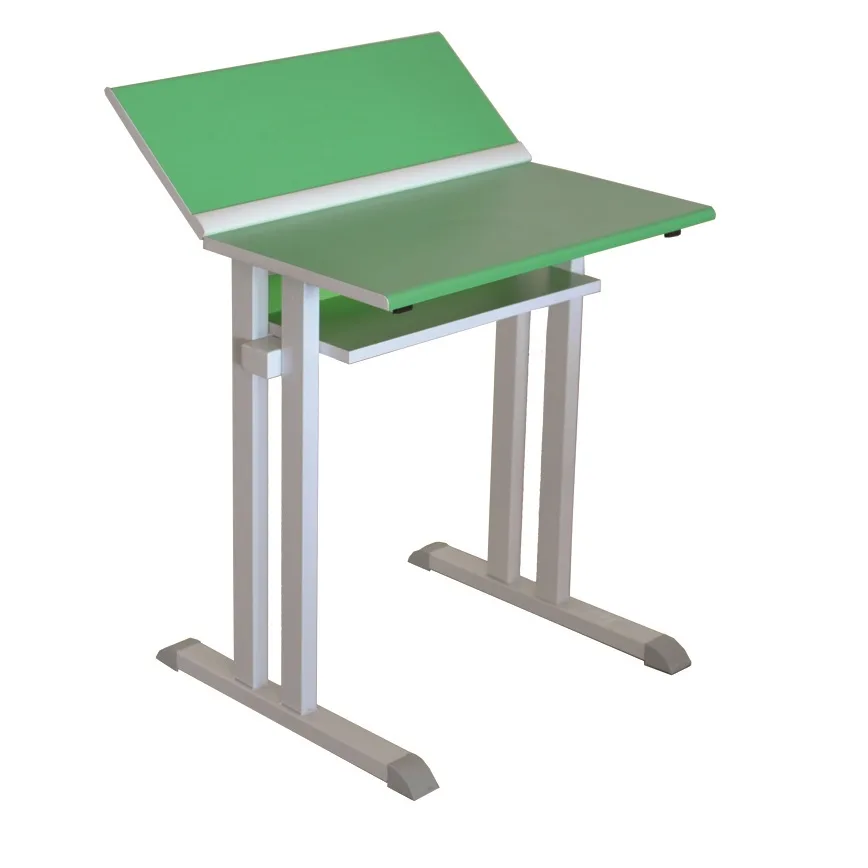
Student Music Table
Student music table for music rooms: 50x70 cm melamine top with space for sheet music and instrument, powder-coated frame. Code MM 01.

2 product groups
Writing boards, cabinets, modular and workshop tables, and all complementary classroom equipment.
Student music table for music rooms: 50x70 cm melamine top with space for sheet music and instrument, powder-coated frame. Code MM 01.
Student art table for art rooms: 50x70 cm melamine top, powder-coated frame, optional paint- and water-resistant surface. Code RM 01.
Specialist classrooms — the art studio, the music room, the design and technology room — cannot be equipped with the same furniture as an ordinary classroom. In these spaces the work surface must be both wider and resistant to a different kind of wear. Sırasan's school workshop table family is dimensioned for the two rooms where a standard classroom desk is not enough.
| Product | Code | Top | Why this size |
|---|---|---|---|
| Student Art Table | RM 01 | 50×70 cm melamine | Room remains at the edges for materials with a 35×50 cm sheet fully open |
| Student Music Table | MM 01 | 50×70 cm melamine | An open music notebook (~40×60 cm) and an instrument sit side by side |
The dimension is not arbitrary; it comes from the materials. In an art lesson a 35×50 cm sheet, a water pot, a palette and a brush set sit on the surface at once. In a music lesson an open music notebook takes roughly 40×60 cm, with a recorder or melodica beside it. In both cases a standard classroom top falls short and the student has to put materials on their lap or the floor.
50×70 cm is the smallest practical size that allows those two objects side by side. Larger tops mean fewer tables fit in the same room.
| Material | Resistance | In which studio |
|---|---|---|
| Melamine (standard) | Wipes clean, does not stain; normal use | Music room, lightly used art studio |
| Compact laminate | High resistance to paint, glue, water and cutting tools | Heavily used art studios |
We recommend a matt surface in a light, neutral colour. Glossy surfaces reflect the ceiling lighting: in art they make it harder for the student to see their own work, in music they make staff lines harder to read. A dark or saturated top also misleads the eye about the colours of the work on it.
Layout in specialist classrooms varies with the form of the lesson:
| Layout | Advantage | In which lesson |
|---|---|---|
| Single / rows | Individual work, examination conditions | Art — individual work, assessment |
| Two- or four-table island | Shared materials, teacher access | Art — group projects |
| U shape / semi-circle | Everyone sees the teacher and one another | Music — rhythm and choir work |
In a music room the tables must also be easy to move: students sit at tables for theory, and the middle is cleared for practice and choir work. Both tables are produced as singles, so that switch takes a few minutes.
Equipping a workshop or specialist room follows a different order from an ordinary classroom. The flow of the lesson is established first, and furniture is chosen afterwards — not the other way round.
| Step | Question | What it determines |
|---|---|---|
| 1 | What materials will be on the table at once? | Top size |
| 2 | What will the surface meet (water, paint, glue, instruments)? | Top material |
| 3 | Will students work individually or in groups? | Layout |
| 4 | Does the layout change during the lesson? | Table portability |
| 5 | Where will materials be stored? | Cabinet and shelf position |
A table alone does not make a workshop. An art studio needs material storage, a drying rack and proximity to a sink; a music room needs a lockable cabinet for instruments and dedicated wall space for larger ones. Table layout must not block access to those storage points.
On the seating side, ease of cleaning comes to the fore; moulded plastic student chairs are the most practical option where paint is involved. In workshops with heavy group work, a mixed layout with trapezoid-top desks is also possible — joined trapezoid tops form a hexagonal work island.
This category currently covers workshop tables for art and music rooms. Complementary classroom equipment — writing boards, cabinets and modular tables — can be supplied on a project basis; share your requirement and we will assess our existing solutions and supply options together. Our workshop equipment page covers the space as a whole.
A standard classroom desk top is roughly 45×63 cm, sized for notebooks and textbooks. In an art lesson a 35×50 cm sheet, a water pot, a palette and a brush set sit on the surface at once; in a music lesson an open music notebook (~40×60 cm) and an instrument do. A standard top falls short and the student has to put materials on their lap or the floor.
The dimension comes from the materials: 50×70 cm is the smallest practical size that allows a sheet of drawing paper or an open music notebook to sit beside the materials that go with it. Larger tops mean fewer tables fit in the same room, so choosing an unnecessarily large top costs capacity.
Melamine wipes clean and does not stain; it is sufficient for a music room and a lightly used art studio. In art studios where gouache, acrylic and glue are used intensively we recommend compact laminate, whose resistance to paint, water and cutting tools is markedly higher. The frame is identical in both options, so different rooms can use different tops while the school stays visually consistent.
Yes, both. We recommend a matt surface: glossy tops reflect the ceiling lighting, making it harder in art for the student to see their own work and in music to read staff lines. The colour should be light and neutral — a dark or saturated top misleads the eye about the colours of the work on it.
It varies with the lesson. In art, a single or row layout suits individual work and assessment, and two- or four-table islands suit group projects. In music, a U shape or semi-circle is preferred; everyone sees the teacher and one another, which makes rhythm and choir work easier to keep in time. We recommend leaving at least 80–90 cm between tables.
Yes; both tables are produced as singles so they move one at a time and a layout change takes a few minutes. The impact-absorbing plastic glides on the feet protect the floor and reduce friction noise during moving — a detail that matters more in a music room than in other classrooms.
An art studio needs material storage, a drying rack and proximity to a sink; a music room needs a lockable cabinet for instruments and dedicated wall space for larger ones. Table layout must not block access to those storage points. On the seating side ease of cleaning comes first; moulded plastic models are the most practical option where paint is involved.
Workshop tables are produced at project scale; quantity, top material and colour are set per order. Project surveys are free — share your studio dimensions and student numbers and we will prepare a layout proposal together with a quotation. Shipping is priced according to order volume and delivery province and is added to the quotation separately.