



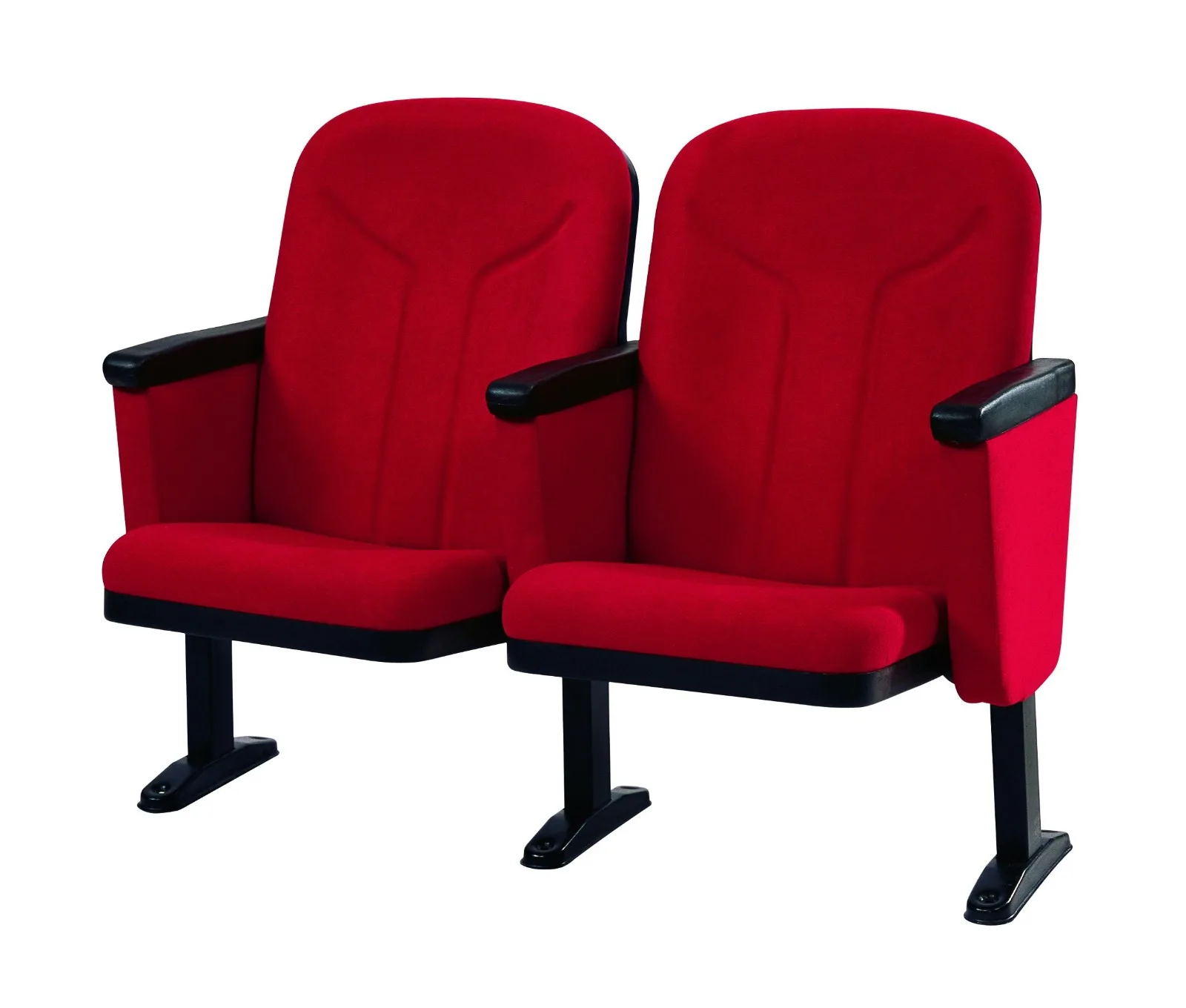
Conference Seat
Product Code: KF 10
Moulded-foam conference seat: fabric or leather covering, with armrests, floor-fixed profile legs. Made to project for conference and seminar halls.
- Product code
- KF 10
- Filling
- Moulded foam (produced in a mould)
- Covering
- Fabric or leather
Free project survey Custom, quote-based pricing TSE / ISO 9001 certified production
Key Features
- Moulded foam filling — produced in a mould, even density distribution, sinking starts later
- Fabric or leather covering option — determined by acoustic and cleaning priorities
- Fabric covering absorbs sound reflection — an acoustic advantage in conference halls
- Armrest body; in side-by-side installation two seats share the same armrest
- Hard-surfaced armrest top — wear resistance at the most touched point
- Floor-fixed installation with wide-based profile legs — row alignment and aisle width preserved
- Aligned to the step edge in tiered halls
- Made to project — planned to hall dimensions
Product Description
The moulded-foam conference seat is a fixed seating unit produced for conference and seminar halls and offered with fabric or leather covering options. With its armrest body and floor-fixed profile legs, it is installed in rows. In halls where long sittings are the norm, comfort is directly related to the quality of the filling material — and that is exactly where this model’s distinguishing feature begins.
What is moulded foam, and how does it differ from cut foam?
There are two different production methods for foam-filled seating units. The common one is cutting block foam to the dimension required. Moulded foam, by contrast, is produced by pouring into a mould matching the form of the seat; that is, the foam takes the shape of the seat directly in the mould rather than by being cut afterwards.
The practical result of the difference is density distribution. Filling produced in a mould forms a more even and stable structure across the surface; the tendency to sink in the middle of the seating surface over time is delayed. In a hall of hundreds of seats, that is the factor determining whether the seats still look the same five years later. In cut-foam production the sinking differs from seat to seat, so the hall takes on an untidy appearance over time.
Fabric or leather?
The covering is determined from two options. Fabric covering is less warm during long sittings thanks to its breathable structure, and the colour choice is far wider; it is also advantageous acoustically, because it absorbs sound reflection more than hard surfaces do. In conference halls, acoustics is a more important dimension of seat selection than it appears.
Leather covering is preferred in halls seeking ease of cleaning and a corporate appearance; its surface is wiped clean and stains do not soak in. On the other hand it increases sound reflection and is not as comfortable as fabric in warm weather. The decision depends on the purpose of the hall: fabric is chosen more often in academic auditoriums and long seminar halls, leather in protocol and meeting halls.
Armrest and row installation
The seats have armrests, and when installed side by side two seats share the same armrest. That both saves space and makes the row look unified. The upper surface of the armrest is produced from a hard material; it is more wear resistant than a fabric- or leather-covered armrest and, because it is the point hall users touch most, that choice directly affects service life.
Floor-fixed installation and hall layout
The seats are fixed to the floor with wide-based profile legs. In conference halls this is a requirement of both safety and order: the seats do not slide, row alignment is not broken and the width of evacuation aisles stays constant. In tiered halls one row falls on each step and the installation line is set relative to the step edge.
The relationship between the installation points and the floor covering should be assessed from the start too. In carpeted halls the foot plates rest on the carpet and the seats have to be removed when the covering is later renewed; on ceramic or concrete floors anchor grip behaves differently. If a floor renewal is planned in your hall in the near future, we recommend leaving the seat installation until after that work — otherwise the same job is done twice. We work out sequencing decisions of this kind together at the survey stage.
When the layout plan is produced, row lengths, aisle positions and evacuation routes are calculated together. The capacity of the hall comes not from dividing the area but from these net lengths. The gaps to be left for accessibility are also planned at this stage.
The seat’s role in hall acoustics
In conference hall design, acoustics is usually associated with wall and ceiling coverings, whereas the seats form the largest surface in the hall. In a hundred-seat hall the total area of upholstery surface often exceeds the area of acoustic panelling. For that reason the choice of covering is not only a visual but an auditory decision.
Another dimension is the difference between the hall full and empty. The human body absorbs sound; in an empty hall reverberation time lengthens noticeably. Because fabric-covered seats keep absorbing sound when empty too, they reduce the full-versus-empty difference and let microphone settings work consistently in both states. In halls with a sound system installed, that is a concrete advantage in ease of use. If your hall has an acoustic design, we recommend assessing the seat covering together with that project; if you have an acoustic consultant, it is worth asking them about the covering choice too.
Project process, maintenance and quotation
This product is made to project. The process begins with measuring the hall: row lengths, tier heights, aisle and evacuation route positions. Our survey service is free of charge. Once the dimensions are settled, a layout plan and a price quotation based on it are prepared; installation and transport are shown as separate items in the quotation. The delivery charge is calculated according to order volume and destination province and is not included in the product price.
On maintenance, regular vacuuming is sufficient for fabric-covered seats and wiping with a damp cloth for leather. On floor-fixed systems we recommend checking the installation points once a year — that keeps the hall in its original alignment for years.
Re-covering is another item that may come up in the long term. Where the filling and frame are sound and only the fabric has worn, replacing the covering can be considered instead of renewing the whole hall. To be able to make the cost comparison for that decision, we recommend keeping the seats’ original order details — fabric code, production date and quantity. Even if the same fabric cannot be obtained years later, finding a close alternative is far easier when the record exists.
Models and Variants
| Model | Code | Description |
|---|---|---|
| Conference Seat — Fabric Covering | KF 10 | Breathable surface, wide colour range and sound absorption. Recommended for academic auditoriums and long seminar halls. |
| Conference Seat — Leather Covering | KF 10 | A wipe-clean surface and a corporate appearance. Preferred in protocol and meeting halls. |
| Row Installation Build | KF 10 | Seats are installed side by side and form a row through shared armrests; row lengths are set to the hall plan. |
Frequently Asked Questions
What is the difference between moulded foam and cut foam?
With cut foam, block material is cut to the dimension required. With moulded foam, the filling is produced by pouring into a mould matching the form of the seat. Filling produced in a mould forms a more even and stable structure across the surface; the tendency to sink in the middle of the seating surface over time starts later.
Why does that difference matter in a hall with hundreds of seats?
In cut-foam production the sinking differs from seat to seat and the hall takes on an untidy appearance over time. Because density distribution is more even in moulded foam, the seats still look alike years later — that is the main factor preserving visual consistency in large halls.
Should we choose fabric or leather?
It depends on the purpose of the hall. Fabric breathes, is less warm during long sittings, has a wide colour choice and contributes to acoustics by absorbing sound reflection — suitable for academic auditoriums and seminar halls. Leather is wiped clean and gives a corporate appearance; it is preferred in protocol and meeting halls, but it increases sound reflection.
Are the seats fixed to the floor?
Yes, they are mounted to the slab with wide-based profile legs. In conference halls this is a requirement of both safety and order: the seats do not slide, row alignment is not broken and the width of evacuation aisles stays constant.
Does each seat have its own armrests?
When the seats are installed side by side, two seats share the same armrest. That both saves space and makes the row look unified. The upper surface of the armrest is a hard material; because it is the most touched point, that choice directly affects service life.
How do you determine our hall's capacity?
Capacity is calculated not by dividing the hall area per person but from row lengths. Row lengths, aisle positions and evacuation routes are assessed together; the gaps to be left for accessibility are also planned at this stage. We charge nothing for the survey.
How is it maintained?
Regular vacuuming is sufficient on fabric-covered seats and wiping with a damp cloth on leather. On floor-fixed systems we also recommend checking the installation points once a year; that keeps the hall in its original alignment for years.