


Cafeteria & Dining
Melamine Canteen Table
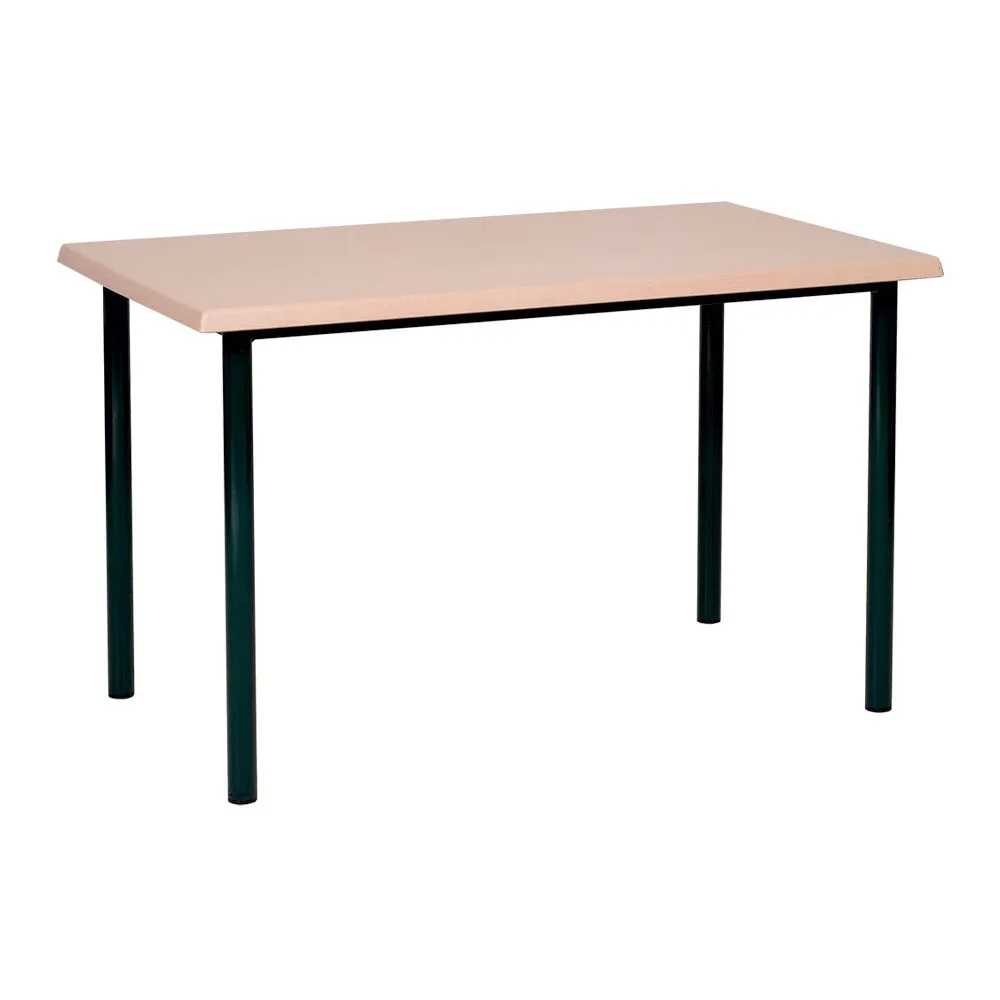
Canteen table with 30 mm melamine top for schools and institutions: 80x140 cm standard size, custom sizes available, powder-coated steel frame. Code…

3 product groups
Durable cafeteria tables and seating groups for school, institutional and factory dining halls — easy-clean solutions built for intensive use.
Canteen table with 30 mm melamine top for schools and institutions: 80x140 cm standard size, custom sizes available, powder-coated steel frame. Code…
Werzalit-top table for school and institutional canteens: 80x140 cm moisture-resistant top, box profile frame, powder coating. Code YM 01.
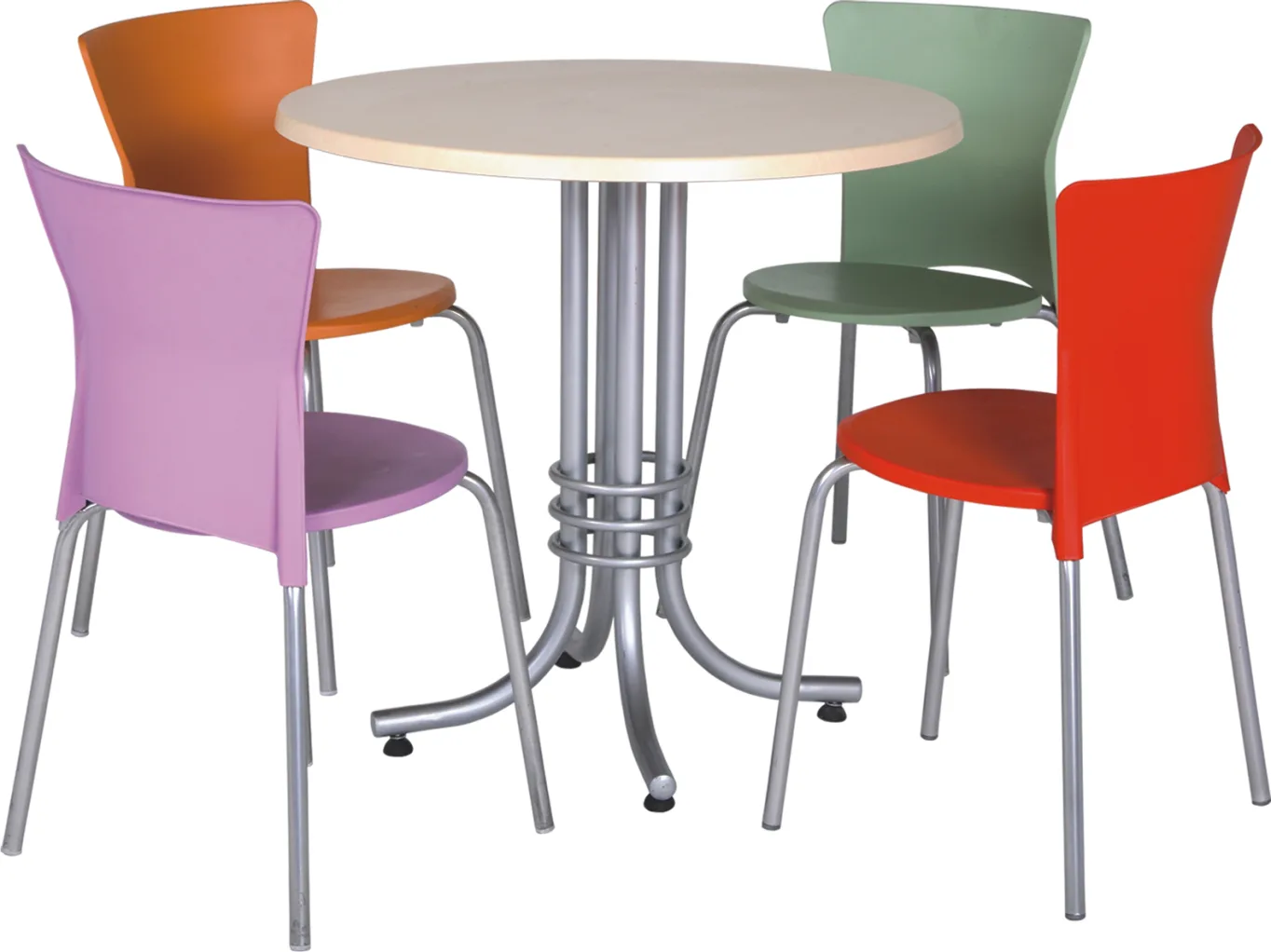
Round Werzalit-top table for school snack bars: 90 cm diameter, moisture-resistant top, powder-coated frame, seats four. Code YM 03.
The canteen table faces the harshest conditions of any furniture in a school: three meals a day, wet cleaning after each, hot plates, spilled soup and acidic liquids. Under those conditions the one thing that determines a table's life is how the top behaves against moisture. Sırasan produces three products in this category: two rectangular dining tables and one round snack bar table.
| Product | Code | Top | Capacity | Where |
|---|---|---|---|---|
| Werzalit Canteen Table | YM 01 | 80×140 cm Werzalit | 6 (with trays) | Heavy-use canteen |
| Melamine Canteen Table | YM 02 | 80×140 cm, 30 mm melamine | 6 (with trays) | Canteens needing colour/decor flexibility |
| Round Snack Bar Table | YM 03 | 90 cm diameter Werzalit | 4 | Snack bar, cafeteria, break area |
This is the most decisive choice in a canteen project.
| Werzalit | 30 mm melamine | |
|---|---|---|
| Structure | Resin-pressed homogeneous wood fibre | Melamine-faced chipboard |
| Edge | Rounded profile — no separate band | PVC band |
| Moisture | The body itself resists | Depends on the edge band |
| Colour/decor | Wood textured, limited | Wide chart from plain to wood decor |
| Size flexibility | Custom sizes available | Custom sizes available |
The most common failure in a canteen is the edge band lifting. On melamine tops moisture enters at the edge and the panel swells; that is why top thickness matters when melamine is chosen — a 30 mm top widens the surface the band adheres to, strengthening its grip, and removes flex over a 140 cm span.
In a canteen project, table numbers are calculated not from total student numbers but from how many must be seated at once.
| Step | Calculation |
|---|---|
| 1. Simultaneous capacity | Total students ÷ number of service rounds |
| 2. Table count | Simultaneous capacity ÷ people per table (6 or 8) |
| 3. Aisle | At least 100–120 cm between rows of tables |
| 4. In front of the counter | Separate, generous area for the queue |
Share your student numbers and how many rounds you serve in, and we will prepare that calculation and the layout proposal.
A snack bar has a different rhythm from a dining hall: students sit briefly during break, the crowd changes within minutes and everyone is in motion. That is why round tables are preferred there: the corner-free form removes impact risk, seats are not fixed so groups of three and four both use the same table comfortably, and a round layout opens circulation.
What determines the life of a canteen table is not only the material but the cleaning habit. The same table can wear at very different rates in two different schools.
The most critical point is not leaving water standing on the table. Water remaining on the surface after wiping seeps into the joint of the edge band, particularly on melamine tops; that seepage goes unnoticed in the first year and appears in the third as a swollen panel. Passing a dry cloth after wet cleaning is a habit that on its own extends table life by years.
The second point is the choice of cleaning chemical. Abrasive powder detergents and very high-pH industrial cleaners dull the surface over time. Neutral-pH liquid cleaners are sufficient for canteen surfaces and do not damage them.
Table layout cannot be considered independently of the service counter position. The queue forming at the start of a sitting must not block the route to the tables. The practical arrangement is a one-way flow out of the service counter: the student collects their tray, moves towards the tables and returns the tray at a different point. Separating entry and tray-return points removes the most common bottleneck in a canteen.
Chairs here must also be moisture resistant. Our Werzalit panel or moulded plastic student chairs are the most practical options; they wipe clean and do not stain. We do not recommend upholstered chairs for canteens. Our school canteen equipment page covers service flow, surface selection and layout as a whole.
Werzalit is a resin-pressed homogeneous material; the body itself is moisture resistant and its edge is machined as a rounded profile with no band to lift. Melamine offers a far wider colour and decor range. Short rule: the more frequent the wet cleaning, the greater the Werzalit advantage; if corporate colour harmony or section coding is the priority, melamine. Tell us your usage intensity and we will say plainly which is right.
In canteens serving with trays, six people sit comfortably in a facing layout — three along each long edge. Where service is plate-based without trays, the same table can take up to eight. The 80 cm depth matters so that facing trays do not clash in the middle.
Table numbers are calculated not from total student numbers but from how many must be seated at once. We first divide your total student number by the number of service rounds to find simultaneous capacity, then divide that by people per table. We then produce a layout leaving at least 100–120 cm of aisle between rows of tables.
Over long spans such as 140 cm a thin top flexes slightly in the middle and can become a permanent dip over time. A 30 mm top removes that. It also widens the surface the edge band adheres to, strengthening its grip — and since the lifting of edge banding is the most common failure in canteens, thickness is decisive for service life.
A snack bar has a different rhythm from a dining hall: students sit briefly and the crowd changes within minutes. A round table has three advantages: the corner-free form removes impact risk during break, seats are not fixed so groups of three and four both use the same table comfortably, and a round layout gives smoother circulation than the hard corridors formed by rectangular tables.
Yes, custom sizes are available for both rectangular and round tables. Narrow and long halls, columned spaces and corner areas cannot always be filled efficiently with standard sizes. Because production takes place in our own facility, custom sizes do not depend on a sub-supplier and do not noticeably extend delivery time.
Moisture-resistant, wipeable models are required. Our Werzalit panel or moulded plastic student chairs are the most practical options for this space. We do not recommend upholstered chairs because of food staining and moisture. Tables and chairs can be planned in a single quotation.
The Werzalit surface leaves no mark on hot-plate contact and does not stain; it also resists acidic liquids such as vinegar and lemon and canteen detergents. Melamine surfaces also withstand normal service temperatures. We would still recommend using a mat for vessels taken directly from a stove at very high temperature.