



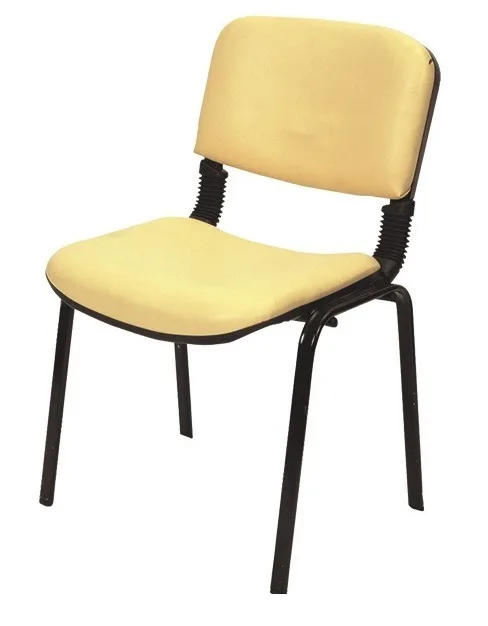
Form Student Chair
Product Code: SN 30
Form chair: fabric-over-foam upholstered seat and backrest, flexing backrest connection, stackable metal frame. For meeting and study halls.
- Product code
- SN 30
- Seat & backrest
- Fabric over foam upholstery
- Backrest connection
- Connecting element with a margin of flex
Free project survey Custom, quote-based pricing TSE / ISO 9001 certified production
Key Features
- Fabric-over-foam upholstered seat and backrest — spreads pressure, delays fatigue in long sittings
- Flexing backrest connection — margin of give when leaning back, prevents load accumulating at the joint
- Stackable metal frame — a feature rarely found on upholstered chairs
- Fabric type and colour selected according to usage intensity
- Surface-treated fabric options that reduce staining are available
- Forward-splaying leg geometry — pulled quickly into storage
- Suitable for study halls, meeting rooms, staff rooms and seminar layouts
- Frame colour selectable
Product Description
The Form chair is a stackable, metal-framed chair that puts comfort first with its fabric-over-foam upholstered seat and backrest. Unlike hard-surfaced school chairs it is designed for long periods of sitting; for that reason it is preferred in study halls, meeting rooms, staff rooms and seminar layouts. It is the first type institutions look at when searching for a fabric-upholstered student chair.
Where does upholstered seating make a difference?
On a hard-surfaced chair, seating pressure concentrates on a small contact area of the body. Over forty-minute lesson blocks that goes unnoticed; but once sitting time exceeds two hours, discomfort begins at the pressure points and the person constantly changes position. Foam padding widens the contact area, spreads the pressure and delays that fatigue.
For that reason the right place for an upholstered chair is not every classroom. In ordinary classrooms, monobloc or Werzalit chairs are both more durable and easier to clean. The upholstered option gains meaning in spaces where sitting time is long: study and working halls, examination centres, staff rooms, administrative meeting rooms and seminar halls.
The flexing backrest connection
Rather than being fixed directly to the frame, the backrest is mounted with connecting elements that leave a margin of flex. When the user leans back, the backrest gives a little and follows the position. That small range of movement does two jobs: it stops the back being locked at a particular angle, and it does not load the whole force of leaning back onto the connection point.
The most common structural fault on fixed-backrest chairs comes from exactly there — the user leans back, force accumulates at a fixed connection and loosening begins over time. The margin of flex distributes that accumulation.
This detail matters because it touches the weakest point of upholstered chairs in a school environment. While chairs in meeting rooms are used a few hours a day, in study halls they are full from morning to evening and users lean back frequently. On fixed-connection products that usage profile turns into loosening within a few years; on a structure with a margin of flex, force is damped a little each time. Share which space you are buying the chair for and we can clarify together the configuration matching that usage profile.
Fabric selection and stain resistance
On upholstered chairs the item that determines product life is the fabric. In intensive-use areas, abrasion-resistant, tightly woven fabrics should be preferred; surface-treated options that reduce staining are also available. On colour, dark tones are more forgiving in daily use, while light tones make a space feel airier but increase the frequency of maintenance. Patterned fabrics are useful here too; finely patterned surfaces show stains and daily marks less to the eye than plain ones.
We recommend assessing fabric selection together with the usage intensity of the space: a room hosting one meeting a day and a study hall full all day do not deserve the same fabric. The fabric chart and colour options are shared during the order conversation.
Seat depth and back angle
Two dimensions determine comfort on an upholstered chair: the depth of the seat and the standing angle of the backrest. When the seat is too deep the user slides forward to reach the backrest and lumbar support drops out; when it is too shallow the thigh is unsupported and weight collects behind the knees. The right depth is the one that leaves a finger’s gap behind the knees when leaning against the backrest.
The back angle varies with the purpose of sitting. In meeting and seminar layouts an upright stance is preferred because the user takes notes and leans forward; in rest-oriented areas a more reclined angle is more relaxing. Because this model’s backrest leaves a margin of flex when leaning back, it sits at a balanced point between the two uses. Share the predominant use of your space and we can assess the suitable configuration together.
Stackable body and storage
The metal frame has a geometry with legs splaying forwards and the chairs can be stacked. This is a feature not always found on upholstered chairs and it becomes decisive in multi-purpose halls: the seminar layout is set up, the event ends, the chairs are stacked and pulled into storage. Because upholstered surfaces touching one another during stacking can leave marks on the fabric, we recommend placing a thin separator between them for long-term storage.
Stack height should be planned too. If the storeroom ceiling is low or the chairs will be moved on a wheeled trolley, deciding the stack quantity in advance eliminates the risk of tipping during transport. In institutions that regularly clear and set up a hall, using a trolley speeds the work noticeably; we can determine together at the ordering stage how many chairs make a safely transportable stack.
Ordering process and quotation
The items to be settled on the order are fabric type and colour, frame colour and quantity. When you share the daily usage intensity of the space we determine the suitable fabric class together — this is the decision that most affects the product’s real life. If both upholstered and hard-surfaced chairs will be used in the same institution, we recommend a survey to plan which goes where; our survey service is free of charge. Setting that distinction correctly from the start prevents the early wear of upholstered chairs placed in the wrong space a few years later — in practice the mistake we meet most often is buying upholstered chairs for ordinary classrooms on comfort grounds. The delivery charge is calculated according to order volume and destination province and added to the quotation as a separate item; it is not included in the product price.
Models and Variants
| Model | Code | Description |
|---|---|---|
| Form Chair — Dark Fabric | SN 30 | Dark-toned upholstery. More forgiving on stains and marks in daily use; for intensively used study halls. |
| Form Chair — Light Fabric | SN 30 | Light-toned upholstery. Makes the space feel airier; preferred in meeting rooms and administrative areas, with slightly more frequent maintenance. |
| Form Chair — Heavy-Duty Fabric | SN 30 | Abrasion-resistant, tightly woven fabric class. Recommended for halls that are full all day. |
Frequently Asked Questions
Should we use upholstered chairs in ordinary classrooms?
Generally no. In ordinary classrooms, monobloc or Werzalit chairs are both more durable and easier to clean. The upholstered option gains meaning in spaces where sitting time is long: study and working halls, examination centres, staff rooms, meeting and seminar halls.
Why does the backrest flex — is that a fault?
No, it is part of the design. The backrest is mounted with connections leaving a margin of flex; when the user leans back it gives a little. That stops the back being locked at a particular angle and prevents the load of leaning back accumulating at a single connection point — which is exactly where the most common fault on fixed-backrest chairs comes from.
Which fabric should we choose?
This is the decision that most determines product life. In intensive-use areas, abrasion-resistant, tightly woven fabrics should be preferred. A room hosting one meeting a day and a study hall full all day do not deserve the same fabric; share the usage intensity of the space and we will determine the suitable class together.
Is dark or light colour better?
Dark tones are more forgiving on stains and marks in daily use. Light tones make the space feel airier but increase the frequency of maintenance. Surface-treated fabric options that reduce staining are available in either case.
Can it be stacked despite being upholstered?
Yes, and this is a feature not always found on upholstered chairs. Because the metal frame's legs splay forwards, the chairs stack; it becomes decisive in multi-purpose halls where a seminar layout is set up and cleared away.
Is there anything to watch out for in long-term storage?
Upholstered surfaces touching one another during stacking can leave marks on the fabric. For long-term storage we recommend placing a thin separator between them; for short daily stacking that is not necessary.
Can we use both upholstered and hard chairs in the same school?
Yes, and that is generally the right arrangement. Monobloc or Werzalit in classrooms, upholstered chairs in long-sitting areas. We recommend a survey to plan which goes where; our survey service is free of charge.
Other Groups in the Same Category
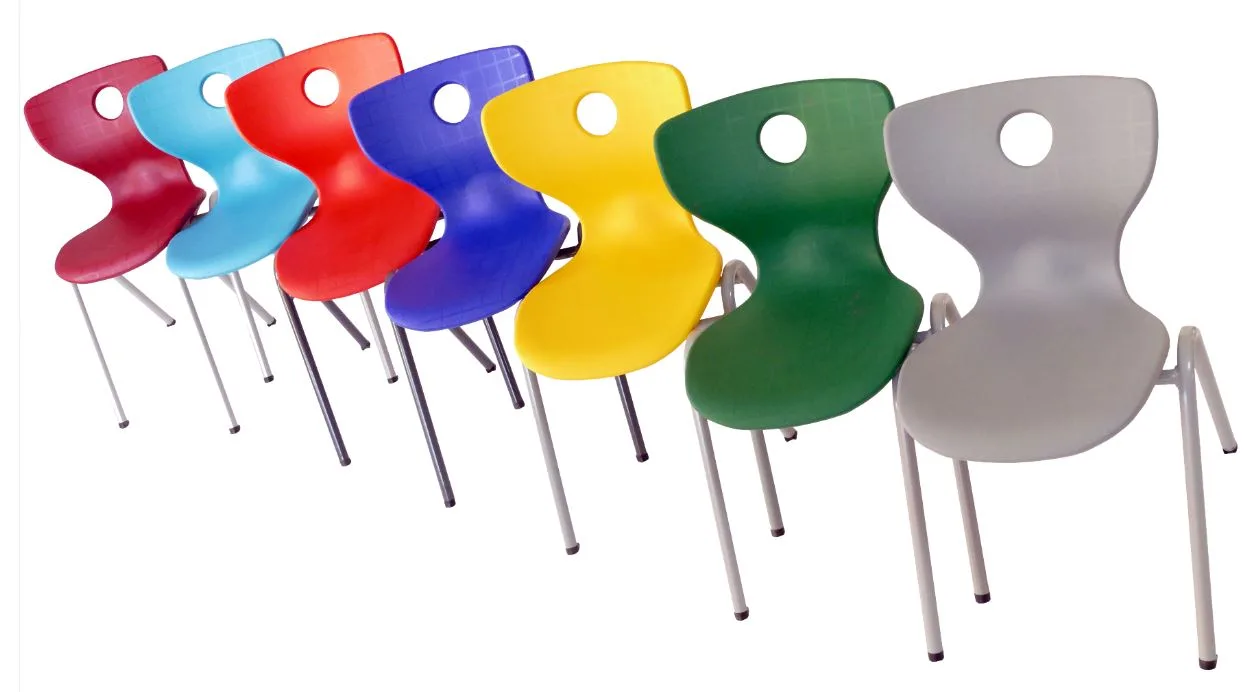
Dolse Student Chair
Dolse monobloc student chair: one-piece flexible plastic seat and backrest, seven colour options, powder-coated tube profile legs. Light and stackable.
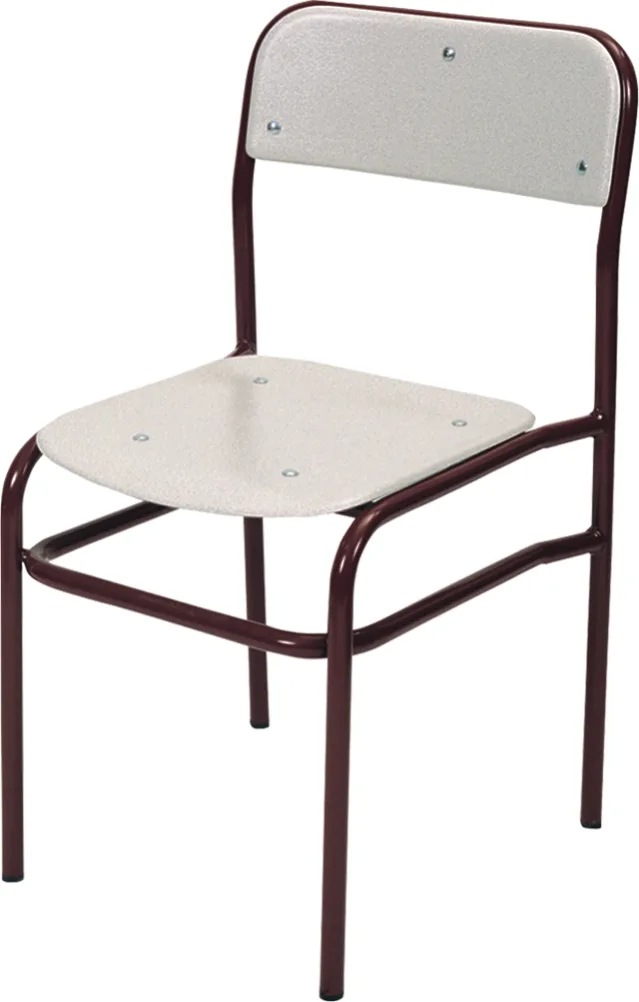
Werzalit Student Chair
Werzalit student chair: screw-mounted Werzalit seat and backrest panels, powder-coated tube profile frame. Suitable for classroom and dining hall use.