



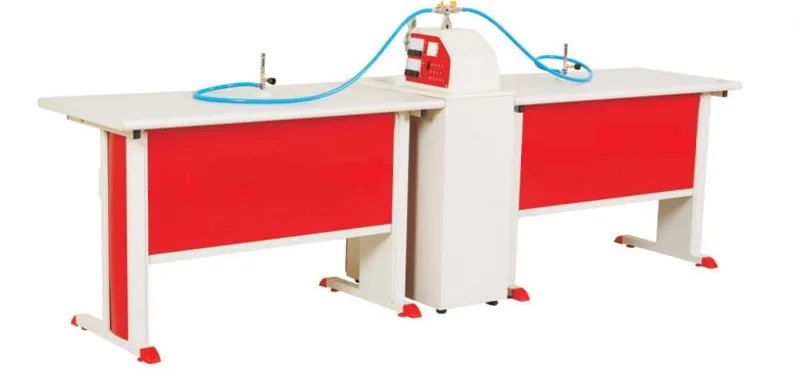
Chemistry Laboratory Table and Unit
Student table and under-unit for school chemistry laboratories: fibre or CDF chemical-resistant top, powder-coated frame, project-based production.
- Working Layout
- Double sided — two facing student rows
- Service Unit
- Central column; gas, water and electricity integrated into the body
- Unit Equipment
- Gas valves + electrical control panel
Free project survey Custom, quote-based pricing TSE / ISO 9001 certified production
Key Features
- Double-sided working layout — two facing student rows on one body
- Central service unit — gas, water and electrical connections integrated into the body
- Gas valves and an electrical control panel on the unit
- Additional tap/fitting points at the ends of the bench
- Fibre or CDF (compact) top — resistant to acids, bases and solvents
- Chemical resistance in the body, not the surface — no different layer appears when scratched
- Electrostatic powder-coated steel frame — no blistering under chemical vapour and moisture
- Coloured front panel — selected from the RAL chart
Product Description
The chemistry laboratory table and unit is the only piece of school furniture that meets chemicals, and it is therefore built to a different material logic from every other classroom item. Sırasan’s chemistry laboratory student table is configured with a fibre or CDF (compact) top to withstand contact with acids, bases and solvents; the unit beneath keeps experiment materials within reach of students but in order.
Why must a laboratory top be different?
An ordinary classroom top is melamine faced. Melamine withstands a drop of dilute acid for a few minutes; on contact with substances such as sulphuric acid, hydrochloric acid or sodium hydroxide the surface dulls, blisters and exposes the chipboard beneath. That exposed chipboard is then damaged directly at the next contact. This is a chain of deterioration that completes itself within a few terms in a chemistry laboratory.
Fibre and CDF tops cut that chain at the start. Both are homogeneous through their body rather than surface-faced; even if the surface is scratched or worn, no different layer appears beneath. The chemical resistance belongs to the structure, not to the surface.
These materials are also resistant to heat and moisture. In a space where work takes place near a burner flame, hot glassware is set down on the table and the area around the sink is constantly wet, all three resistances need to be present at once.
Fibre or CDF?
Fibre tops are the higher class for chemical resistance and are preferred for laboratories with intensive experimental work using real reagents at high school level and above. CDF (compact laminate) is a black-core, high-pressure-pressed structure offering a balanced durability-to-budget point for middle school and basic experiment levels.
The choice depends on the level at which the laboratory will be used. Tell us which experiments your curriculum covers and we will say plainly which top will be sufficient — an unnecessarily high material class wastes budget, while too low a class forces you to replace the tables within a few years.
Under-unit and order
In a chemistry laboratory, disorder is a safety issue in its own right. The unit beneath the table keeps experiment sets, glassware and personal protective equipment within reach of students but closed and orderly. Unit configuration — shelving, drawers, closed compartments and the need for locks — is determined per project according to how the laboratory is used.
We stress that reagents should not be kept at the student table but in a separate, locked cabinet; the under-unit is for experiment materials, not a chemical store. We establish that distinction together when planning the whole laboratory.
Frame and services
The frame is made from steel profile and finished with electrostatic powder coating. Because the coating is oven-cured and bonded to the metal, it does not blister or dull in a laboratory environment where chemical vapour and moisture are concentrated. The feet carry impact-absorbing plastic glides.
Whether water, gas and electrical services are integrated into the table, and the position and number of sinks, are determined per project. Share your laboratory’s existing service infrastructure and plan and we will establish together how the table will be positioned and which connections can be brought to it. This is the real reason a chemistry laboratory requires building a project rather than buying a standard product.
Laboratory layout and safety
Layout in a chemistry laboratory has a single priority: evacuation. Table rows must be positioned so that an uninterrupted, unconstricted route to the door remains from any point. Access to the eyewash station and fire extinguisher must not be blocked by any table.
Aisles between tables should be at least 100–120 cm so that two students working back to back do not collide. Positioning the teacher’s table where the whole laboratory is visible is decisive for supervision. Share your laboratory dimensions and we will prepare a layout proposal meeting these criteria.
Ordering, delivery and project support
The chemistry laboratory table and unit is produced on a project basis; quantity, top material, unit configuration and service integration are determined for your laboratory. Project surveys are free — share your laboratory dimensions, student numbers and existing service plan and we will prepare a layout proposal together with a price quotation. Shipping is priced according to order volume and delivery province and is added to the quotation separately; it is not included in the price. We serve all of Türkiye and export abroad.
Production takes place at our own integrated facility in Ankara; metalwork, woodworking, coating and assembly are under one roof. In spaces such as laboratories, whose dimensions and services differ at every school, this is the advantage that makes a bespoke solution possible. All production complies with CE, TSE and ISO 9001 standards.
Double-sided layout and the central service unit
The “unit” in this product’s name refers not to a storage cabinet underneath but to the central service column rising from the middle of the bench. Gas, water and electrical connections run through that column; it carries gas valves and an electrical control panel, and hoses and supply lines distribute from there to both sides. Tap and fitting points are also located at the ends of the bench.
The layout is double sided: two facing rows of students work on a single body and both share the same service column. That delivers two separate advantages in a laboratory. The first is space — twice as many students can work within the same floor area. The second is services economy: instead of running separate gas and water lines to every bench, both sides are fed from a single point, reducing both the initial investment and the number of maintenance points.
This structure makes it essential to consider the laboratory’s service plan together with the bench: where the column will sit, from which point the supply line will connect and who will have access to the valves are all determined at project stage. Share your existing laboratory service plan and we will settle these together.
Models and Variants
| Model | Code | Description |
|---|---|---|
| Chemistry Table — Fibre Top | Higher class for chemical resistance. For high school and above laboratories with intensive experimental work using real reagents. | |
| Chemistry Table — CDF (Compact) Top | Black-core, high-pressure-pressed structure. A balanced durability-to-budget point at middle school and basic experiment level. | |
| Under-unit Configuration | Project specific | Shelving, drawers, closed compartments and lock requirements determined according to how the laboratory is used. |
Frequently Asked Questions
Can an ordinary classroom table be used in a chemistry laboratory?
It should not be. Melamine-faced tops withstand a drop of dilute acid for a few minutes; on contact with strong acids or bases the surface dulls, blisters and exposes the chipboard beneath, which is then damaged directly at the next contact. This chain of deterioration completes itself within a few terms. Fibre and CDF tops are homogeneous through their body — the resistance belongs to the structure, not the surface.
Should we choose a fibre or a CDF top?
Fibre is the higher class for chemical resistance and suits high school and above laboratories with intensive work using real reagents. CDF (compact laminate) is a black-core, high-pressure-pressed structure offering a balanced durability-to-budget point at middle school and basic experiment level. Tell us which experiments your curriculum covers and we will say plainly which is sufficient.
If the surface gets scratched, does chemical resistance drop?
No. Fibre and CDF are homogeneous through their body rather than surface-faced; the resistance belongs to the structure. Even if the surface is scratched or worn, no different layer appears beneath. On melamine-faced tops the situation is the opposite — protection ends the moment the facing is damaged.
Can we store chemicals in the unit beneath the table?
No, and we recommend you do not. The under-unit is for experiment sets, glassware and personal protective equipment. Reagents should be kept not at the student table but in a separate, locked cabinet. We establish that distinction together when planning the whole laboratory, and determine the unit configuration according to your usage.
Can water, gas and electrical connections be integrated into the table?
Service integration and the position and number of sinks are determined per project. Share your laboratory's existing service infrastructure and plan and we will establish together how the table will be positioned and which connections can be brought to it. This is the real reason a chemistry laboratory requires building a project rather than buying a standard product.
What do you consider in laboratory layout?
Our priority is evacuation: an uninterrupted, unconstricted route to the door must remain from any point. Access to the eyewash station and fire extinguisher is never blocked by a table. Aisles are left at least 100–120 cm so that two students working back to back do not collide. The teacher's table is positioned where the whole laboratory is visible.
How do delivery and assembly work, is shipping included?
We serve all of Türkiye and export abroad. Shipping is priced according to order volume and delivery province and is added to the quotation separately; it is not included in the price. Project surveys are free. In spaces with services, such as laboratories, we clarify assembly planning before the order and state it explicitly in the quotation.
Other Groups in the Same Category
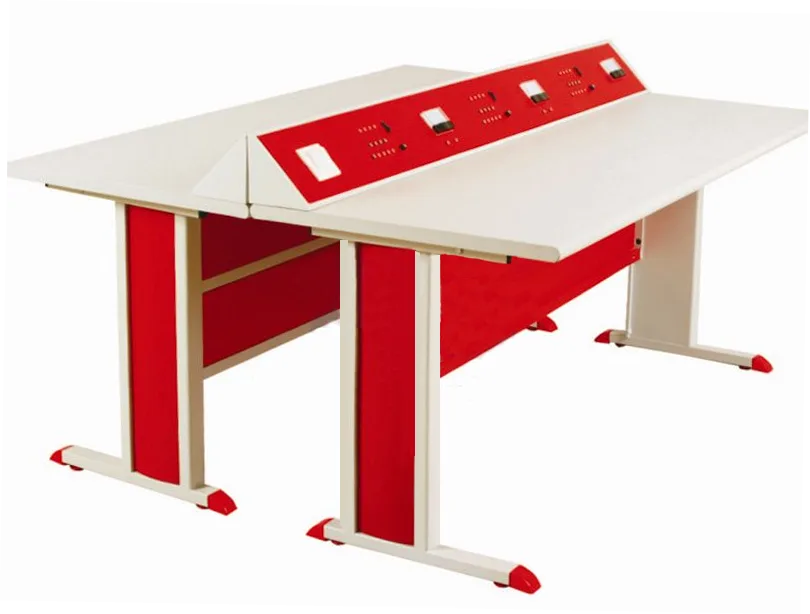
Physics Laboratory Table and Unit
Student table and under-unit for school physics laboratories: fibre or CDF top, flat and vibration-free work surface, powder-coated rigid frame.